Between night dream and reality: The space catalogue
The space catalogue is an expansive list of spatial elements. It is a document in flux. The first version was compiled on the basis of an abstract spatial classification of reality, as a starting point.
By reading the catalogue from different perspectives, which include both the spaces of reality and those of night-time dreams, the uniqueness of the landscape of the misty city shines through.
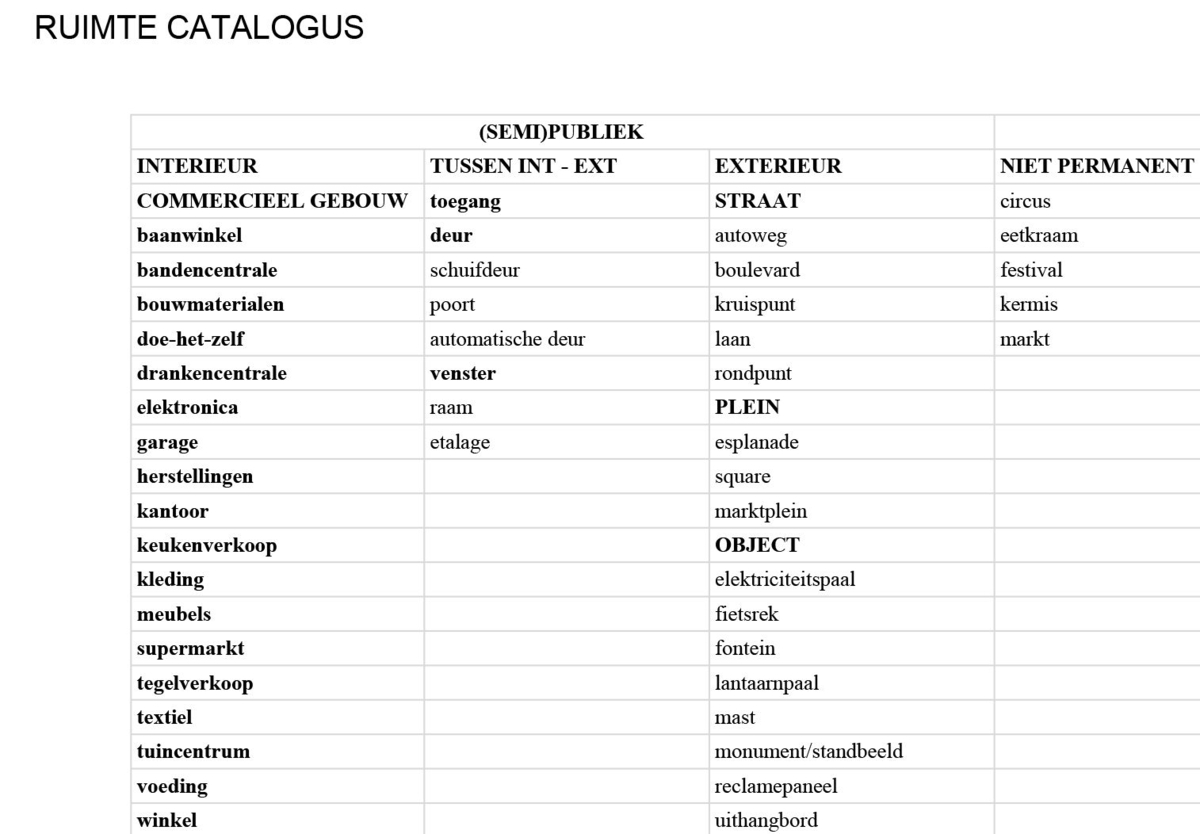
After the cycle lanes, the N9 was highlighted and supplemented in the catalogue with site-specific elements. Categories are under- and overexposed. The morphology of the road is almost visible in the catalogue. It is a line [column: (semi)public exterior] bordered on one side by commercial buildings, the roadside shops, overrepresented on the far left [column: (semi)public interior]. And on the other side bordered by private boundaries (hedges, fences and facades) [column: private exterior]. Interior spaces [column: private interior] remain unillustrated in the catalogue and are therefore also hidden along the road behind the physical boundaries; only windows and doors can sometimes give a glimpse of what is happening inside [column: private between interior-exterior].
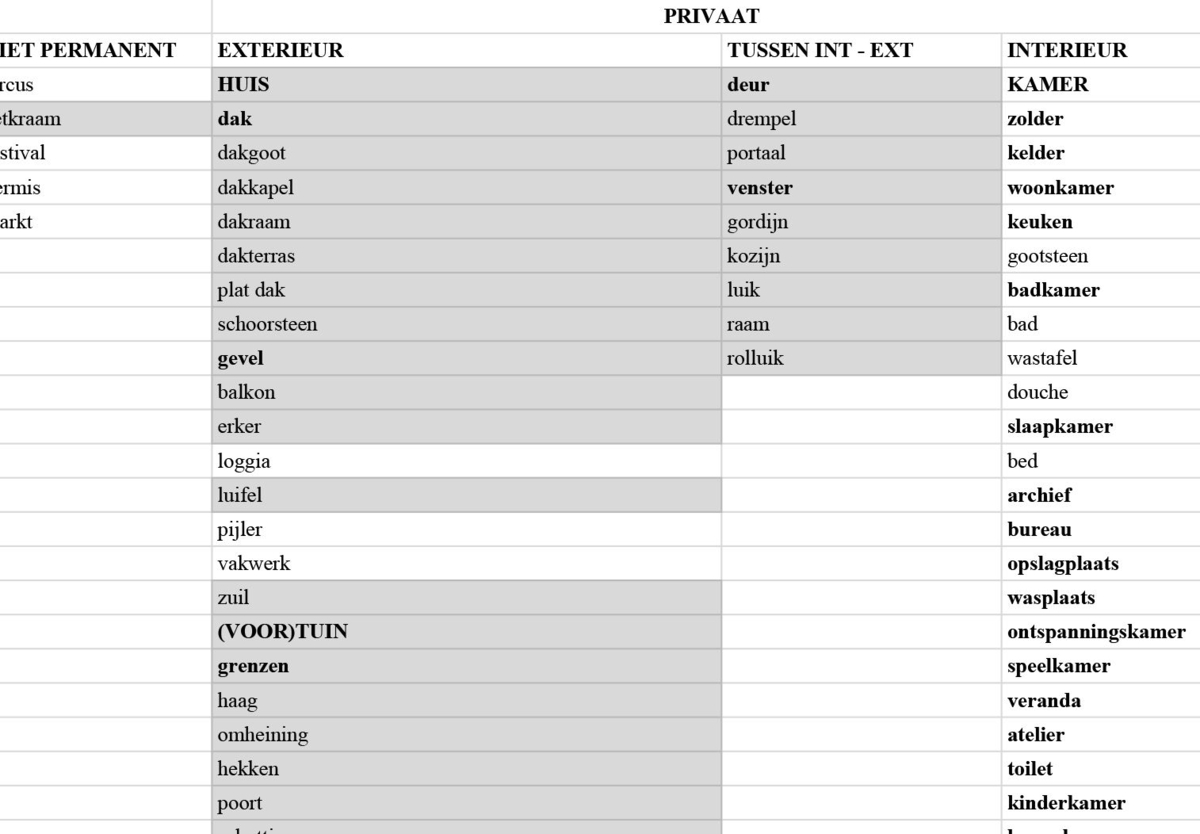
Zoom in on the catalogue here
After analysing the dream scenarios, spaces are highlighted and added to the catalogue that appear in residents' night-time dreams (blue words). The boundary line disappears from the catalogue. The dreams fan out to what the wider surroundings of the N9 could be. Meeting places such as parish halls, recreational areas, football pitches, and public green spaces such as forests, parks, ponds, and lawns intertwine with reality. The interior spaces of the N9 and far beyond also penetrate the landscape and unfold. Fragments of current and former places of residence occupy a significant part [column: private interior]. Categories blend together in dreams into apparent possibilities, waiting rooms in chip shops, fishing ponds hidden behind interior doors, prisons built from scaffolding and open air.
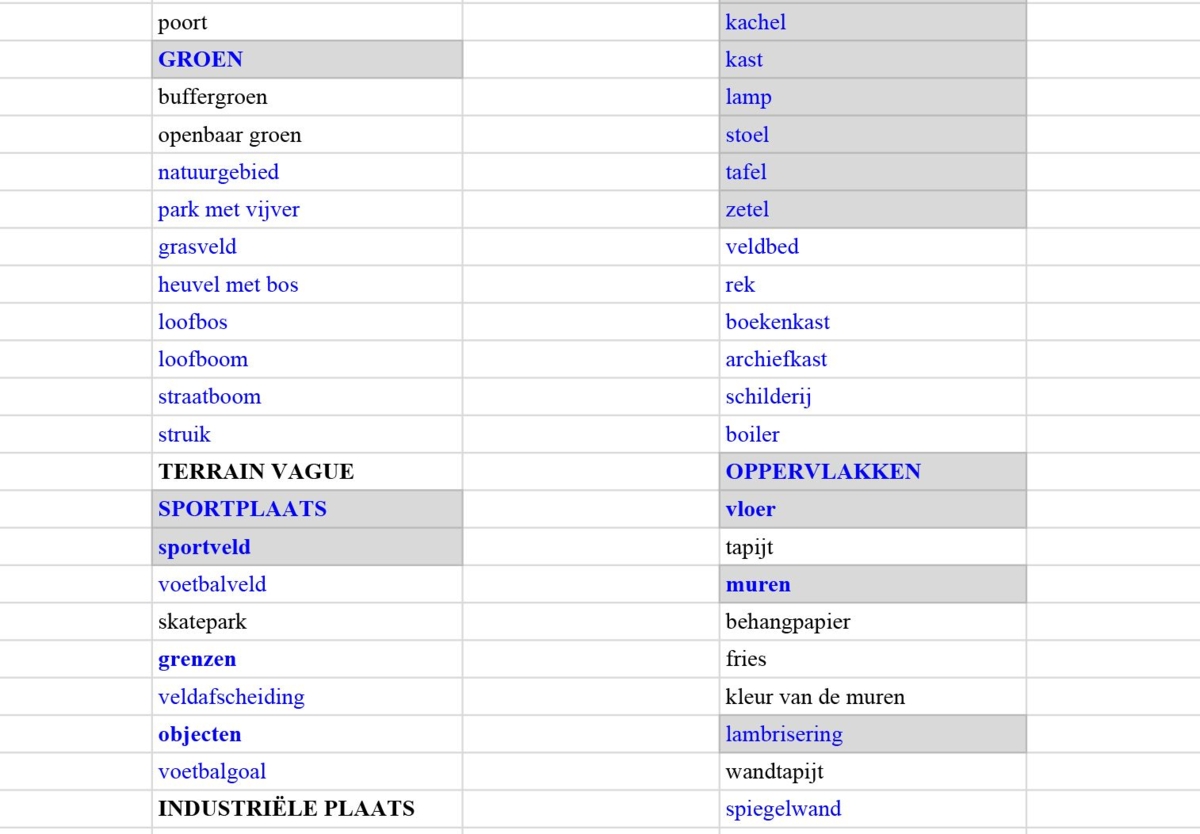
Zoom in on the catalogue here
How does the environment of the N9 appear in the night-time dreams of residents? By superimposing reality and dreams, common elements emerge. What is the (cultural) significance of the spatial elements in reality, and what is the significance of the same element in the dream? Does a wooden fence become a metaphor for protection? And a station concourse a symbol of confusion?
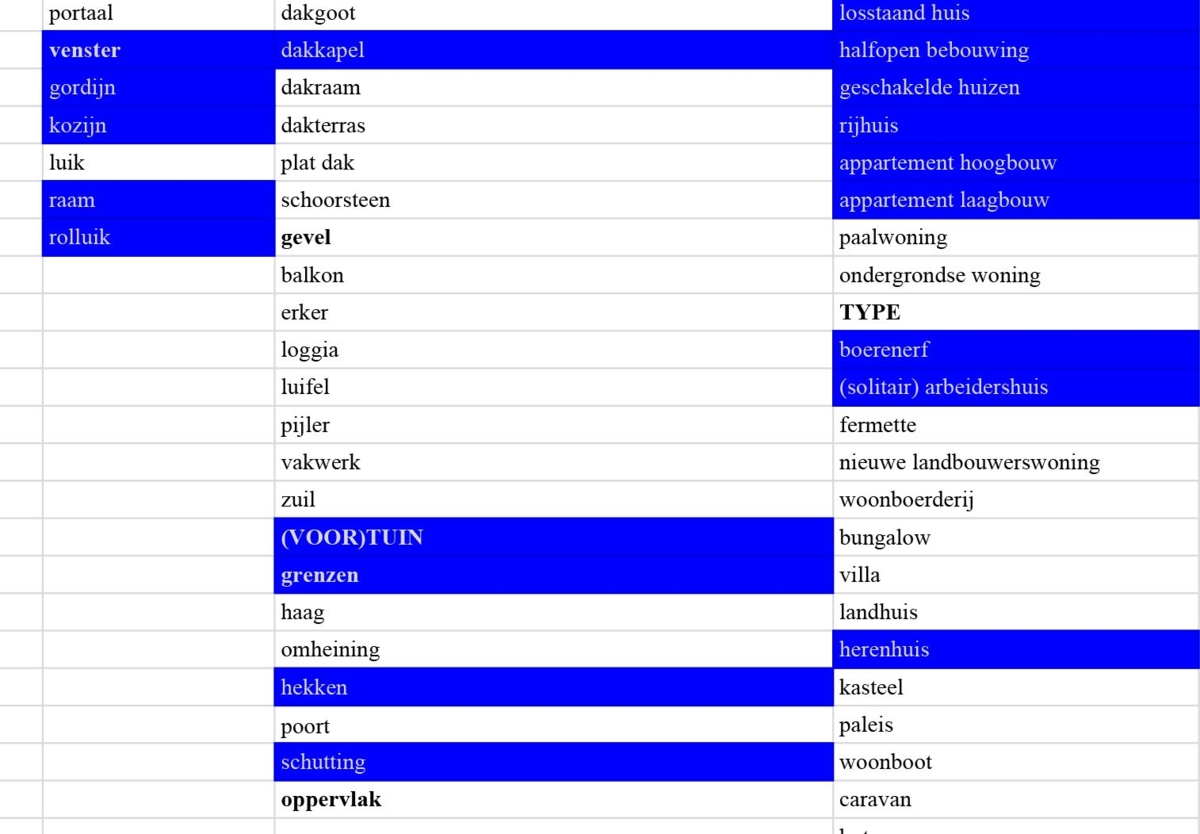
Zoom in on the catalogue here
Typologies that occur in dreams are added. It is an extension of the existing landscape of the N9. Dreams express spaces of resistance. They build on what has disappeared, or break down what remains, a resistance to reality. But places of desire, meaning and fear also confuse the linear constellation.
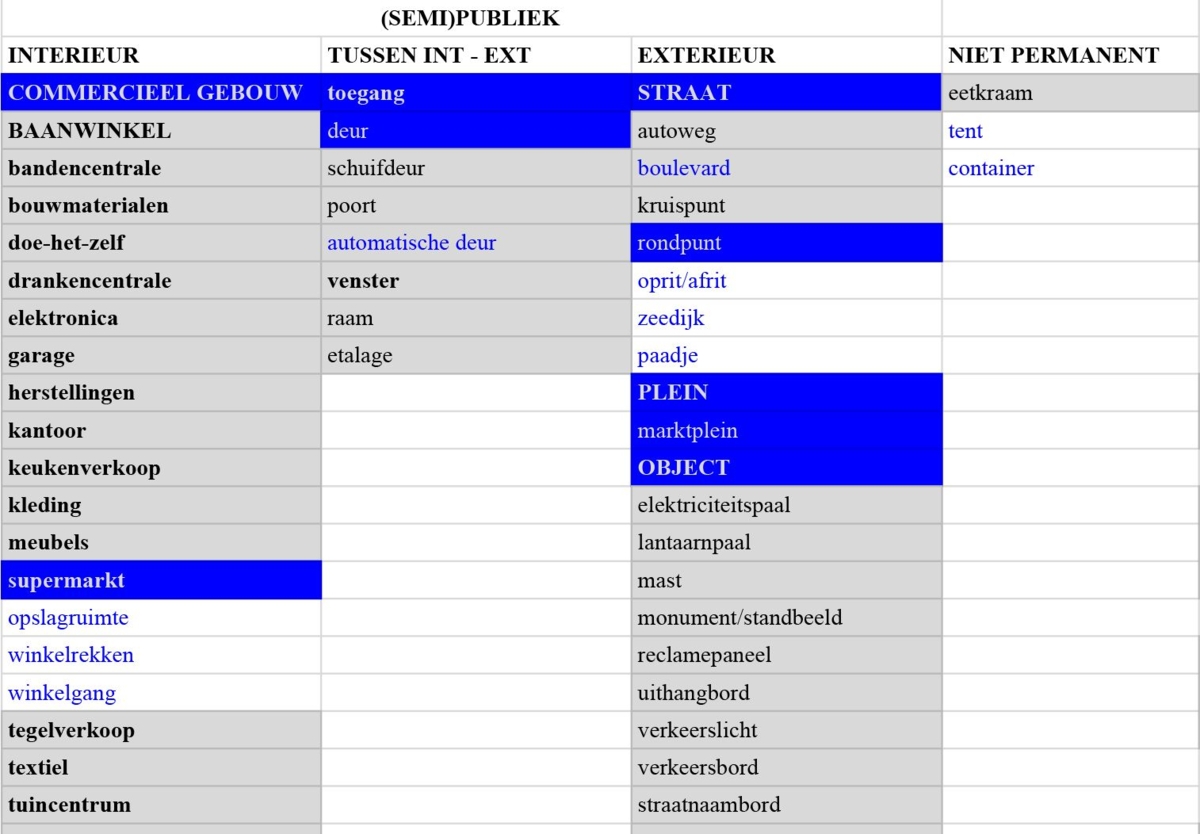
Zoom in on the catalogue here
For Topography of the Night-01-The Nebula City, spatial designer Maxime Vancoillie collects, describes and models a series of nocturnal dream location descriptions, thereby unravelling the architecture of night-time dreams. Her research focuses on the misty city, the area between city and countryside, of which the ribbon development of the N9 is a cross-section.
Read more about this project here.