Report from Expedition Solitaire II
29–30 August 2020, Bruges Junction
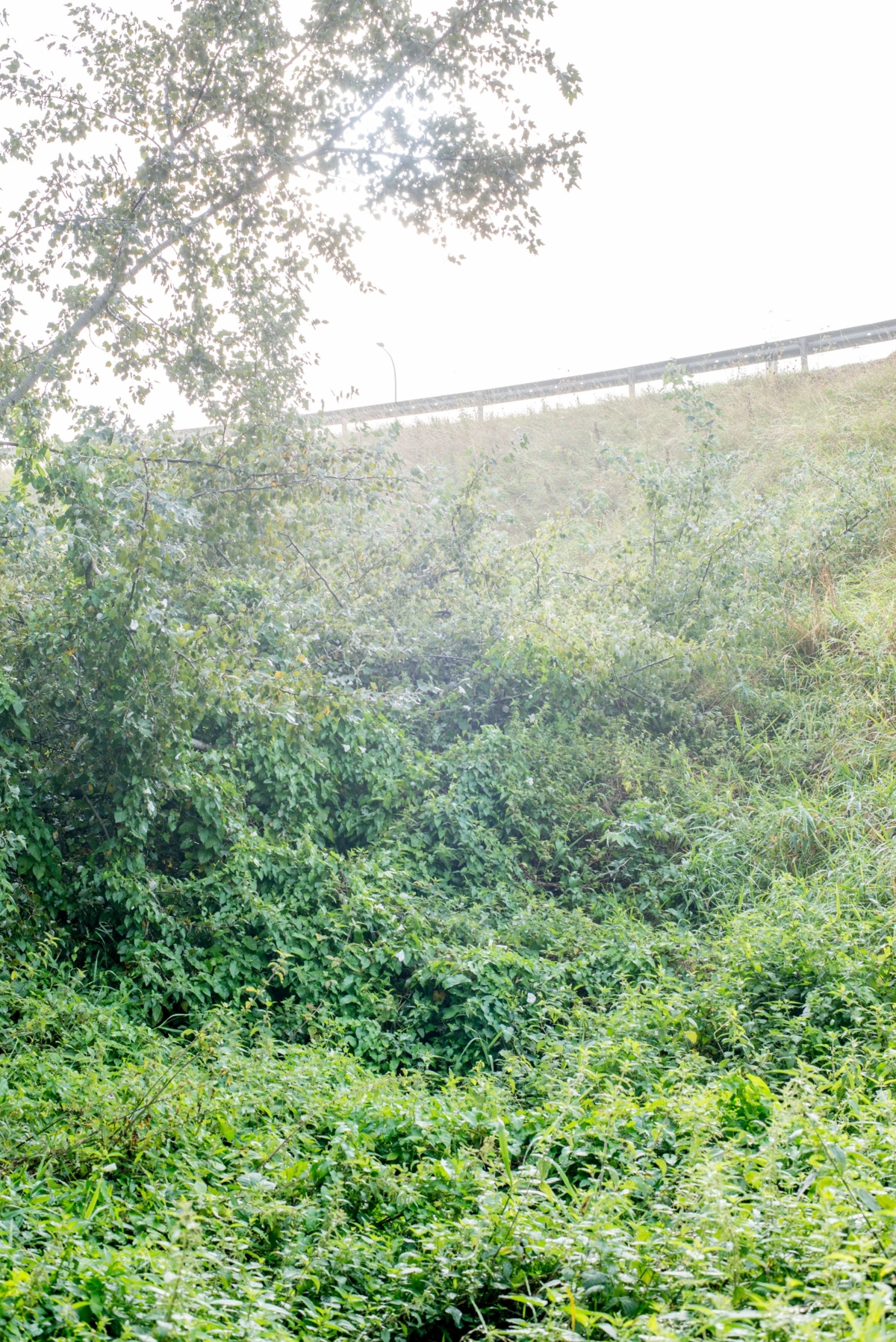
The Brugge junction opened to traffic in 1984. The flat terrain between Oostkamp and Loppem was ideal for the construction of a cloverleaf interchange. Since then, diverse landscapes have emerged in each loop. The Forest is one of them. Traffic and traffic legislation make the area virtually inaccessible to the public, turning the plot into an island. You don't just end up there.
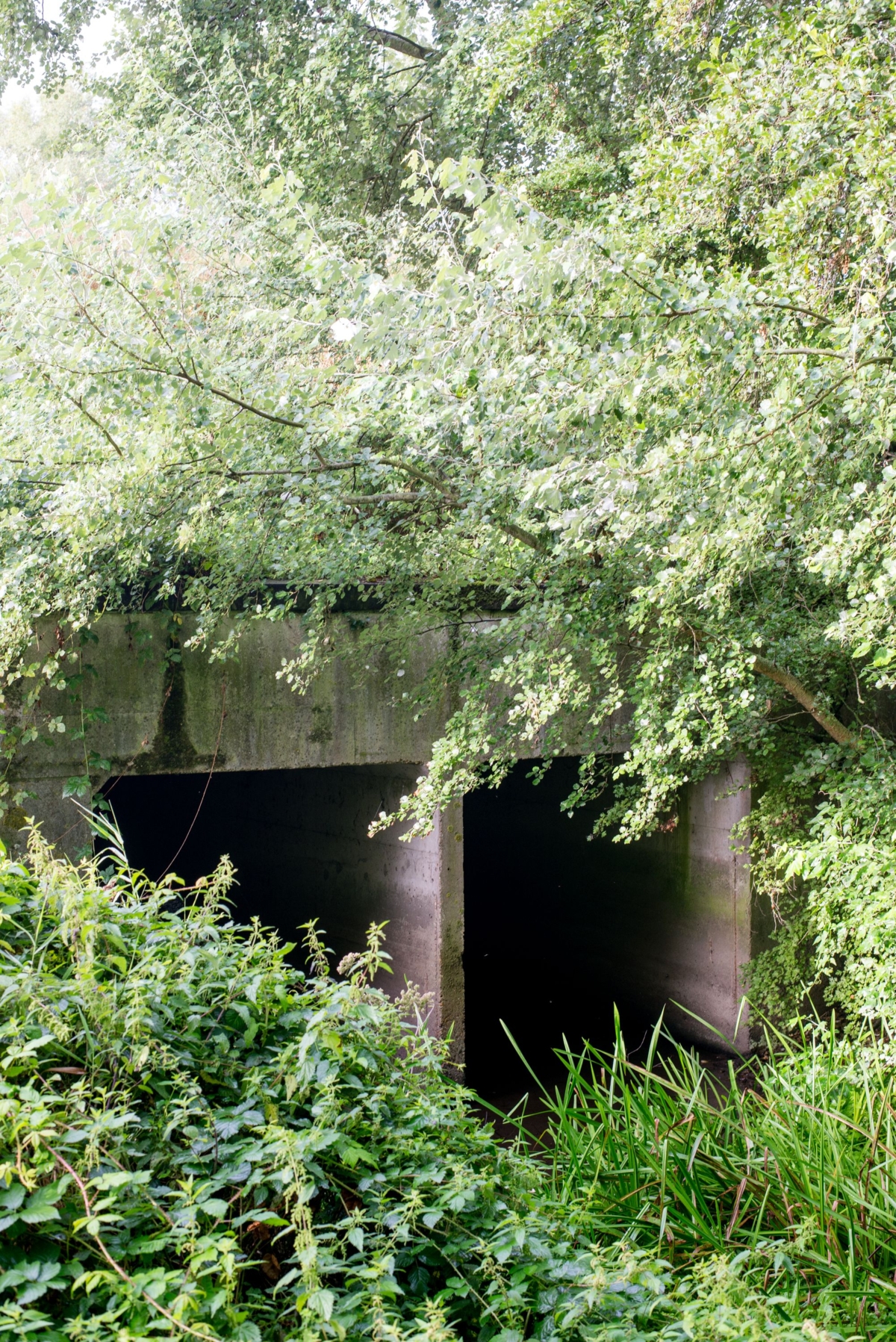
What is special is that a small river flows right through this cloverleaf complex: the Lijsterbeek. This stream rises near the Ruddervoorde exit along the E403, flows a few kilometres northwards parallel to the motorway and then passes under it for the first time. Via a double concrete tunnel, the Lijsterbeek then reaches the Brugge junction and, via two more tunnels, the stream flows under the E40 and from there further north. Finally, the Lijsterbeek flows into the Ghent-Bruges Canal.
During my first expedition, the water level in the stream was extremely low, exposing the muddy bottom in all the tunnels. There were footprints from rats, ducks, moorhens, but also from a fox. I even got to see the latter. The red beast passed me unsuspectingly while I was eating my sandwiches. It became clear to me that this 'island' is cut off by traffic, but just accessible by water. That is almost the opposite of classic islands.
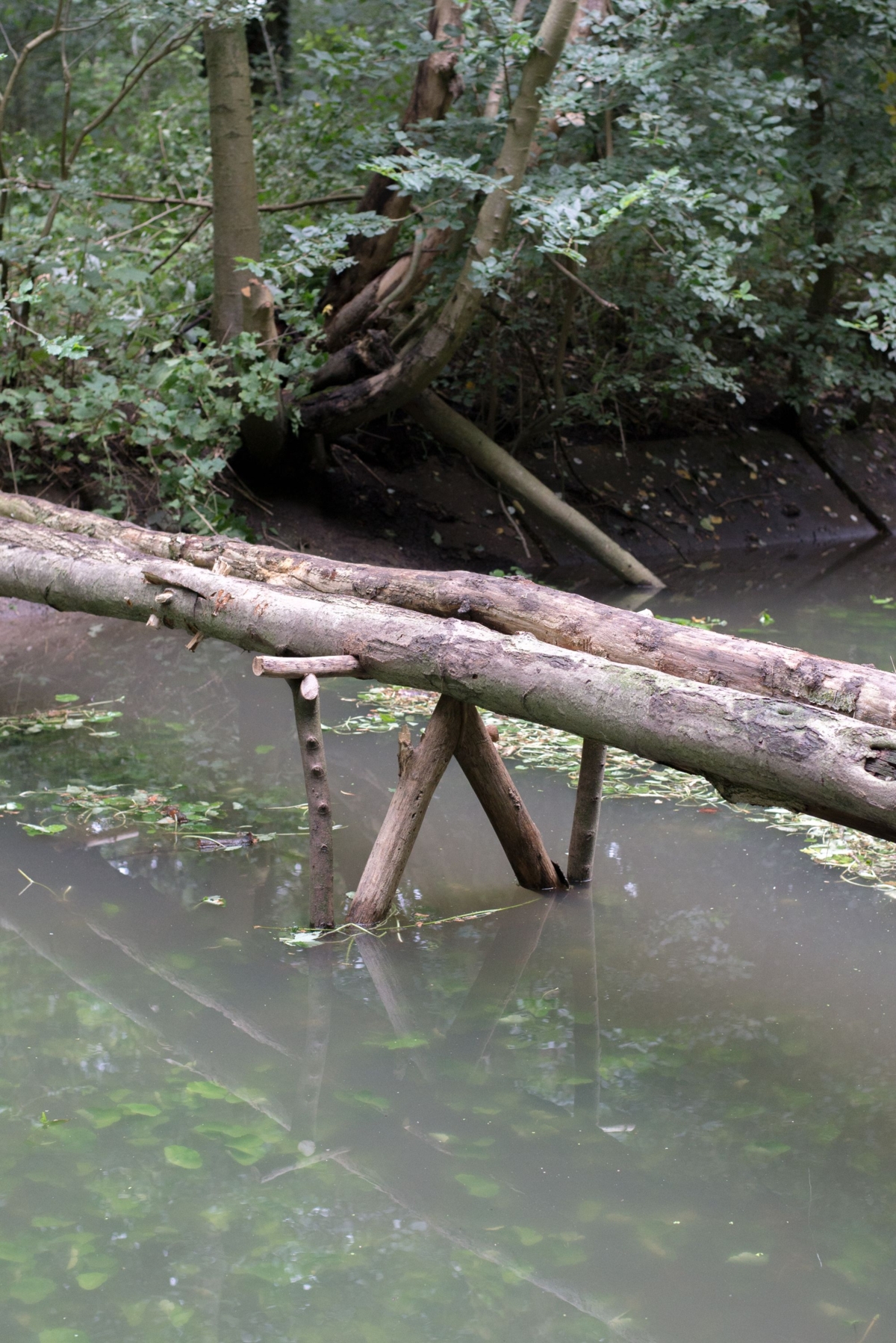
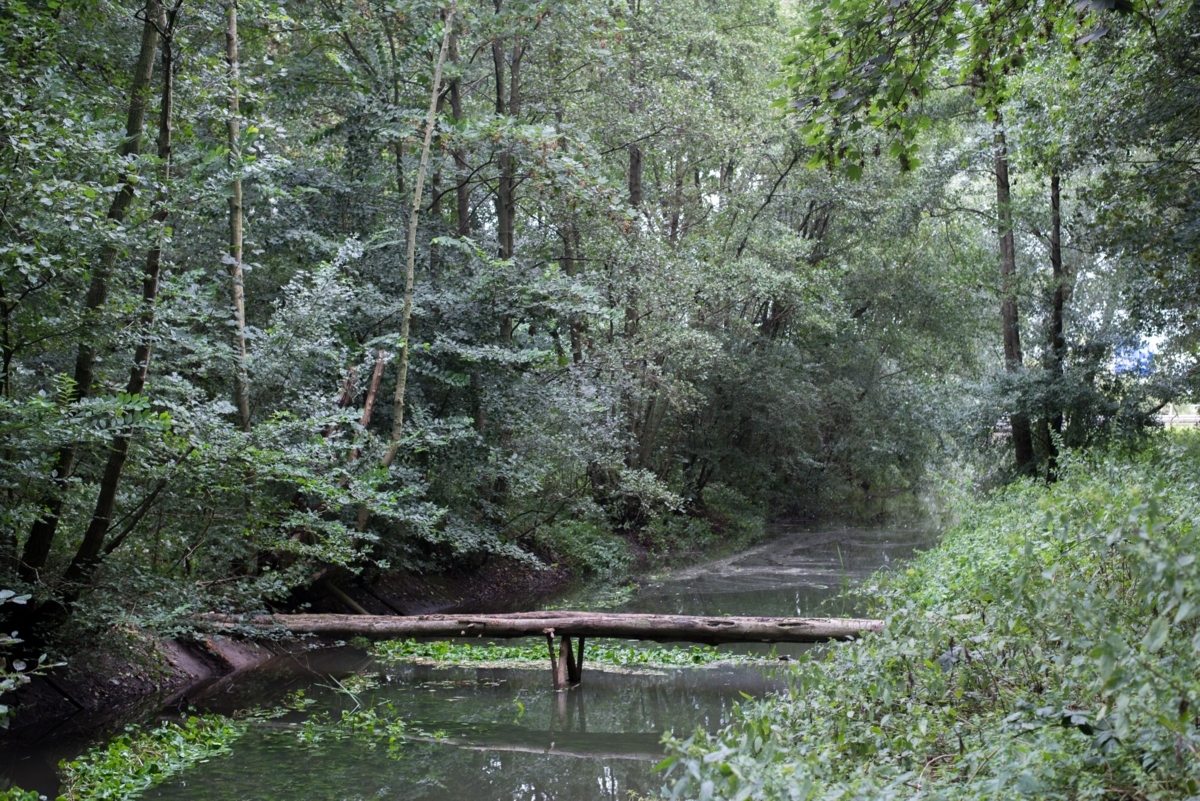
During my second expedition to The Forest, I removed the traces of my previous visit and focused on one thing: a bridge. Regardless of any symbolism, the construction of a bridge was necessary, simply to be able to walk from one part of The Forest to another without getting wet feet. Paradoxically, I had to stand knee-deep in water for an entire weekend to build the bridge, and now that it is there, I will probably never cross it again. The question remains: who will ever cross it? I made the bridge out of untreated wood, and the supporting structure stands permanently with its legs in the water. Sooner or later, the wood will rot and the trestle will collapse. The thick trunks of the bridge deck will remain in place for a while until they too rot and collapse. And that is the scenario in which I have not taken into account the excavators that dredge the Lijsterbeek every so often. Suppose workers come with machines to clean up the Lijsterbeek; will they leave the bridge standing? In any case, they will ask one question: "Who on earth was responsible for this?"
For me, that is the essence of this work. Who on earth would do something like this? What possessed me to undertake two expeditions to a motorway junction to build a bridge over a ditch? A bridge that no one will ever walk over. A bridge that will only be visible from the Ghent exit in the winter months because it is otherwise hidden behind foliage. And even then, because good drivers pay attention to the road and don't look at the flowers on the grass verge. Okay, the work is documented and photos and videos of a bridge over a stretch of stream are shared. Entirely in the spirit of land art as practised by Goldsworthy, for example, reproductions refer to the unattainable original. Only myself, Pia and Viktor have seen the original. We were there during those rainy days, invisible to the thousands of cars that drove by.
So what is it all about, Sibran? Why a bridge over the Lijsterbeek in a cloverleaf junction in Bruges? Is it about creating a mystery for those who come to Het Bos after you? Where is the twist? What makes it something more than what it actually is?
I don't know. All I can say is that I did this because I've wanted to do it for years. Because I'm drawn to these kinds of green, lonely places. Because I get some kind of perverse or childish pleasure from being the 'first' to set foot in these kinds of places. Does this have anything to do with voyages of discovery? Or, even more politically, with colonialism? Have I occupied these places? As far as I'm concerned, it all has to do with a degree of necessity. The refugees who camped there were the pioneers. Their anonymous stay in Het Bos was pure necessity. Have I been an explorer? Perhaps. I mapped out the area and facilitated visits to the place by building a bridge. Has Het Bos become a colony? That is possible, because I have linked my name and practice as an artist to it. It has to do with pride and honour, and it is only within the framework of the arts that such pride and honour can be derived.
And yet it also, and above all, has to do with necessity and an unclear desire for a 'New World' in this era of Google Earth. For me, it's about the small tragedy of wildernesses such as Het Bos, or the Plaat van Walsoorden. These places are not closed off by immeasurable distances, deep waters or dangerous mountain ranges. Satellite images even give a good idea of what these places look like. No, these places are inaccessible due to an accumulation of agreements, of culture. Our lives and our landscape are permeated with constructions and agreements; concrete, asphalt, bricks, laws and decrees.
For me, it's about the urge for relative seclusion, I think. Being able to get away and yet remain close by. The exciting pleasure of being hidden. A desire for peace and quiet that has got out of hand. The idea of being a kind of crazy vanguard of other fugitives, where the bridge has turned into a rather imposing Kilroy was here.
I am not a colonialist, not a pioneer, not an artist. Sometimes I just want to get away for a while, and that's what it's all about for me. Getting some fresh air and enjoying the peace and quiet. Sometimes that's just best done along the E40.
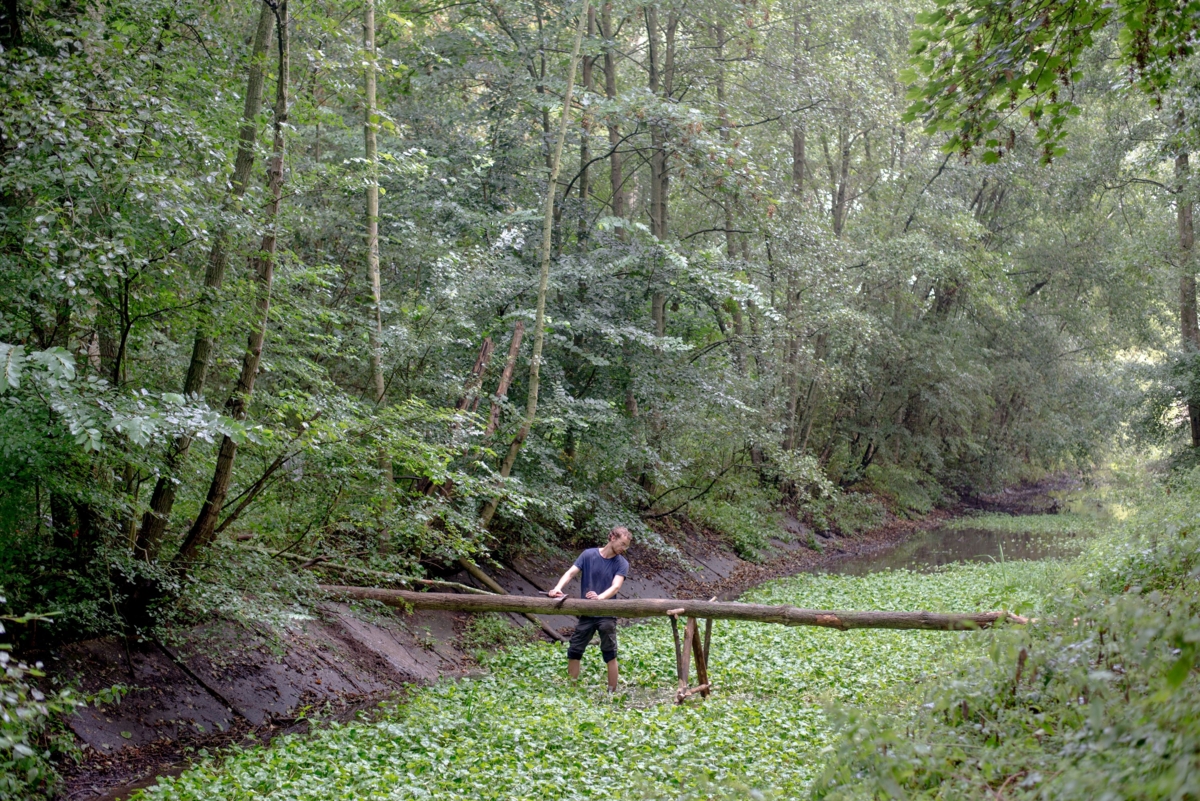
Image: Viktor Van Hoof & Pia De Vylder
Artist Sibran Sampers is working on Tidal Sidles - a furtive advance under the influence of tidal forces as part of the PLAN B/Fieldwork project: a research project in which he records and reflects on his fascination with water (ways). A carefully chosen spot on a riverbank forms the starting point for his stream of consciousness. During this long-term project, he wants to leave temporary traces in various places and work with what is around him.
Read more about the project here.