Letter to Bert
Hey Bert,
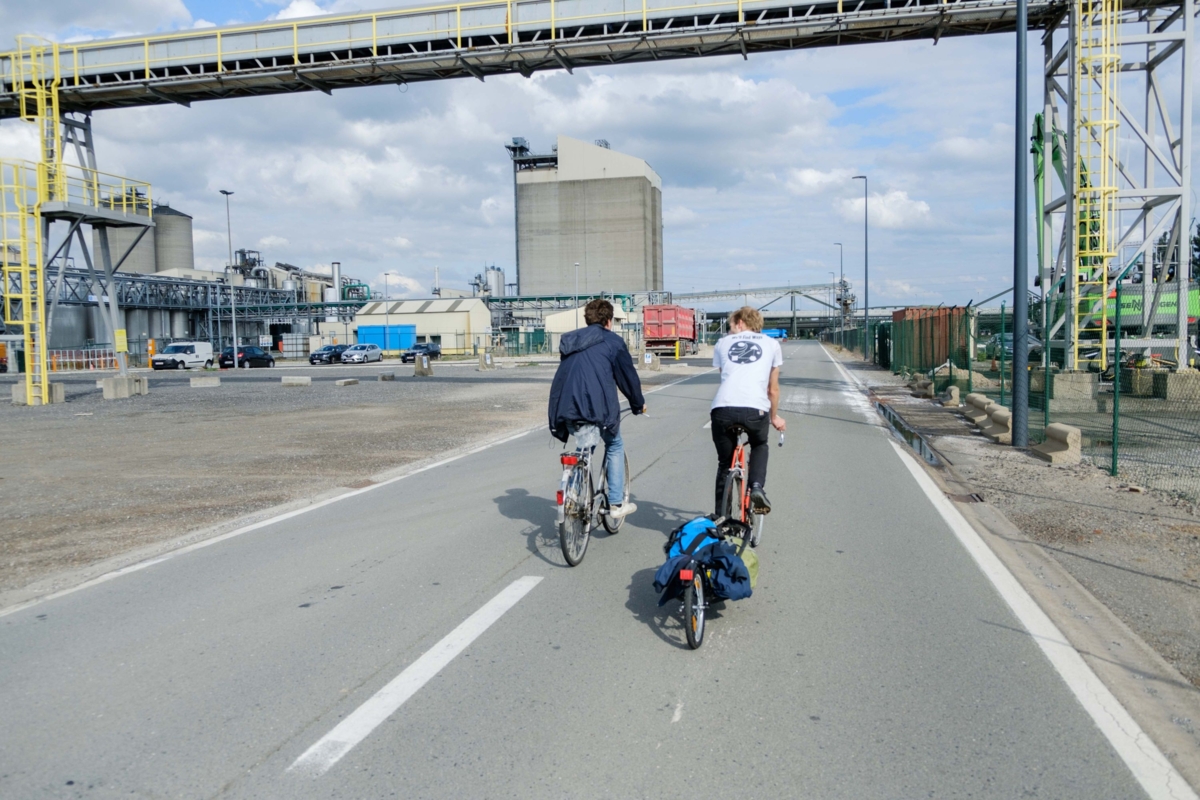
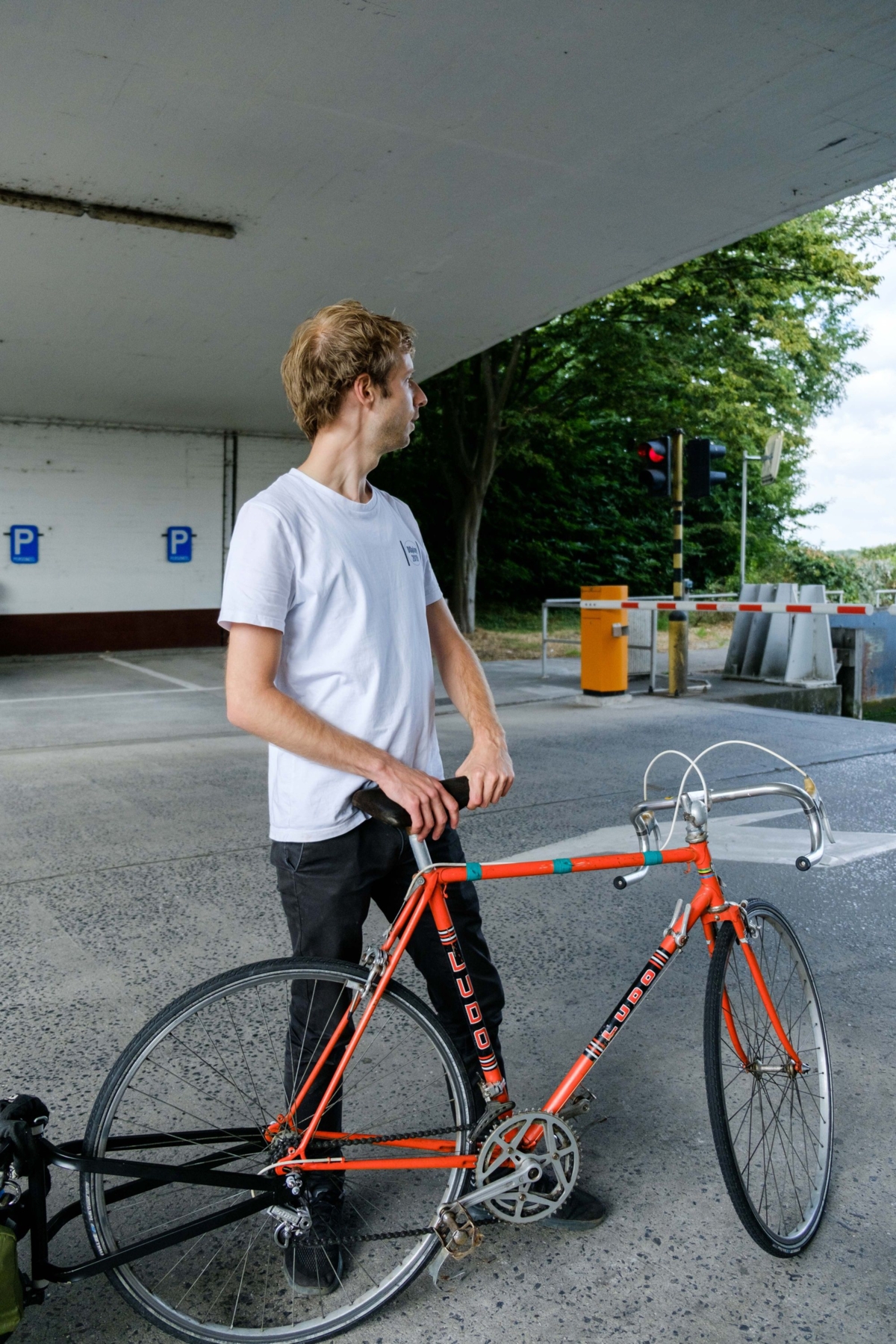
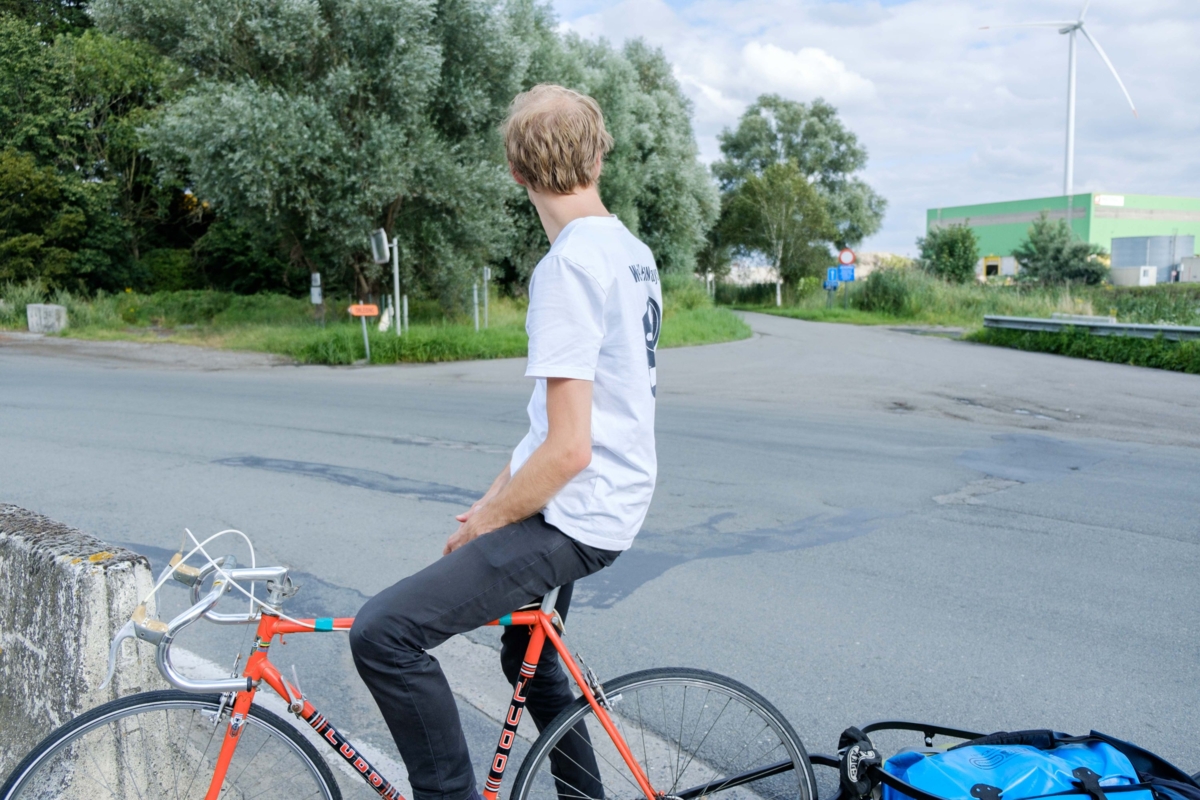
A few weeks ago, you invited me to join one of your tours through the outskirts of Ghent. The unnameable zone, the intersection of rural and urban, places where industry takes over from nature. Wandering around on our bicycles, traffic rushes past us. I feel almost too small to be there. Antennas, chimneys, massive stones, artificial water, platforms and lost green zones fill the landscape. No place for people in an environment filled with man-made landmarks.
On the one hand, these are the landmarks we talk about during our trip. You let us look with the question 'Which elements stand out for you?'. Silently, I follow behind you and Ewoud. I observe the landscape and pick out a few things. I don't know exactly why. We are looking for an element, something that can grow into a fascination, a structure that will become the guiding principle for the further course of your project. When we discussed it over a glass of wine, we also talked about those elements. Architectural structures that define a landscape, by removing them from their familiar context and relocating them or assigning them a new function, you use these elements to talk about space, to install social interactions or to continue to fuel your own love of building. Among other things, the work 'Carbon' that you made two years ago during the PLAN B Arts Festival did this, as did 'You are Here and There'.
And now we are digressing. I read the letter you wrote to Vincent, I leafed through the book 'A Glossary of Urban Voids' and from a distance and sometimes up close I follow your journeys through the periphery. What are we looking for? As if discovering places always lies in the sum of all the little things together. Zooming out, I click on the minus sign on the Google Maps map, further and further and further. Apparently, astronauts suffer from the overview effect as soon as they see the Earth from space. Boundaries no longer exist. From that distance, the world becomes a small, fragile ball 'hanging in the void'.
Now I'm digressing. I'm curious about your view of these places. How do you map the landscape? How do you name places at the crossroads without distinguishing between nature and culture? And who is someone in no man's land?
To conclude: I listened to the podcast of Zwijgen is geen optie (Silence is not an option) with Benjamin Verdonck speaking. And building on his words – how he puts it so beautifully and I then try to recapitulate it: a performance, the temporary sharing of space and time, to make a proposal. Let's build a proposal, weigh it up, build it up and take it down. The conversation, mapping out the environment, the next conversations. Using the building itself as a valuable excuse to use the space. Taking the time to do this and making a proposal. Talking about the landscape, the environment and the elements, but actually about much more. Proposals for the periphery.
On Wednesday, we will go on another trip. I am looking forward to it.
Love, Leontien*
*Leontien Allemeersch is artistic coordinator of the PLAN B Arts Platform.
As part of Veldwerk, artist Bert Villa is conducting research into his own mental blueprint with Memory Landscape. This has resulted in Assembly: a book that takes the reader on an associative journey through constructed landscapes, navigating the boundaries between artistic, functional and spontaneous constructions and everything in between.
Read more about his project here.