Mining roots
Letter to Leontien*
Hi Leontien,
I had a conversation with Max. He, in turn, had had a conversation with Ignacio Chapela, a microbial ecologist who also appears in the documentary Symphony of the Soil. I looked up that documentary after our phone call. This 2012 documentary starts with the sentence: "Only rarely have we stood back and celebrated our soils as something beautiful, and perhaps even mysterious." In the background, you can hear the wind rustling softly. Somehow, it works well. But anyway, that's beside the point. Max and Ignacio met via Zoom. Each from their own forest. Max didn't know if he lives in a log cabin in a forest somewhere in California, but in any case, Ignacio was sitting in such a log cabin in a forest for the duration of the Zoom conversation.
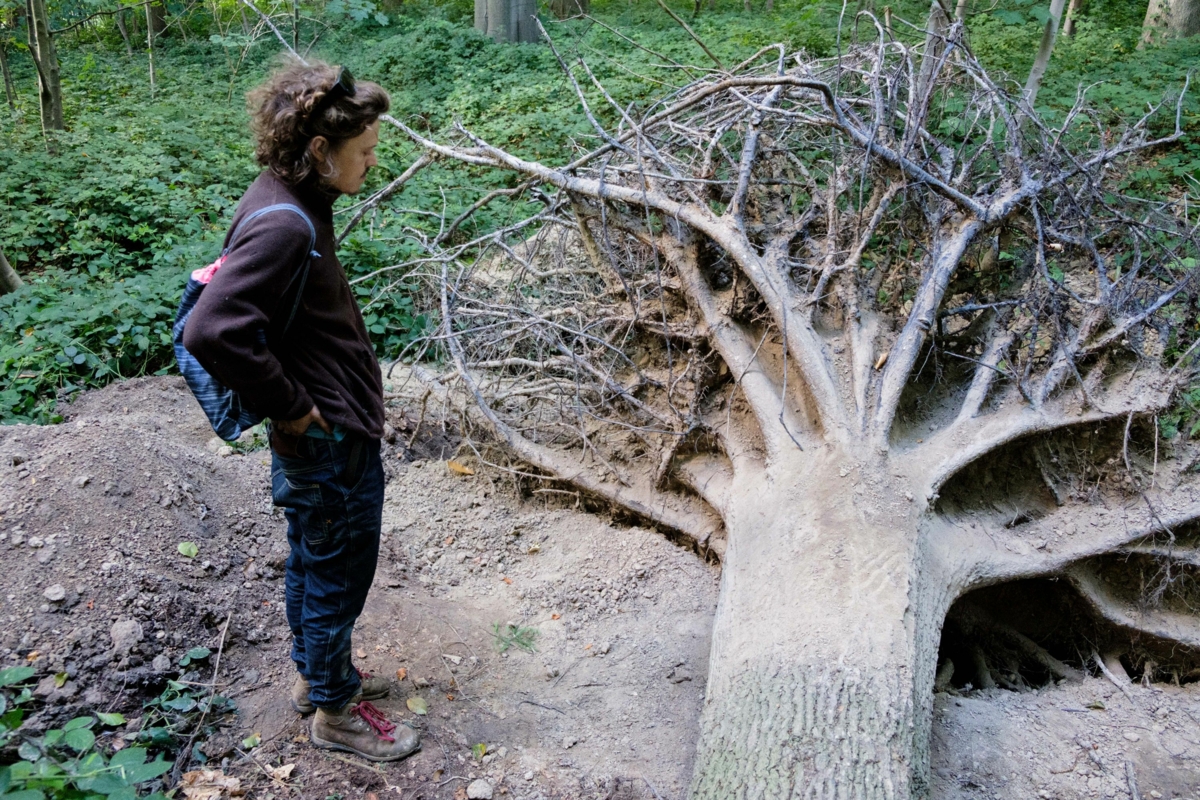
Ignacio said that Max's tree has a good heart. "The tree has a good heart," he said. "That's not a poetic phrase," Max corrected me. It's a technical term. It means that the tree did not die of disease, that it did not start to rot from the inside, but that the tree fell while still healthy. Technically speaking, it is still alive. The tree. Because apparently it takes a very long time for trees to die. Long after they have fallen. That also applies when they are rotten or diseased. Apparently. At some point, I asked Max if it was intense to remove a living tree from a forest, but Max told me that Ignacio said that was a dramatic way of looking at things. A tree is technically dead when it no longer photosynthesises, Ignacio told Max. So technically, a tree dies every winter.
Ignasio also talked about soil. That soil is the foundation of all things. And also that soil was once stone, or something like that. But in any case, soil forms a basis. Max enjoyed talking to someone who knows what they are talking about. I, in turn, liked that Max had a meaningful technical conversation that I found very poetic. Max told me in our first conversation that moving that tree is actually mainly a project that serves as an excuse to meet people. I thought the conversation he had with Ignacio was a very valuable step in his process.
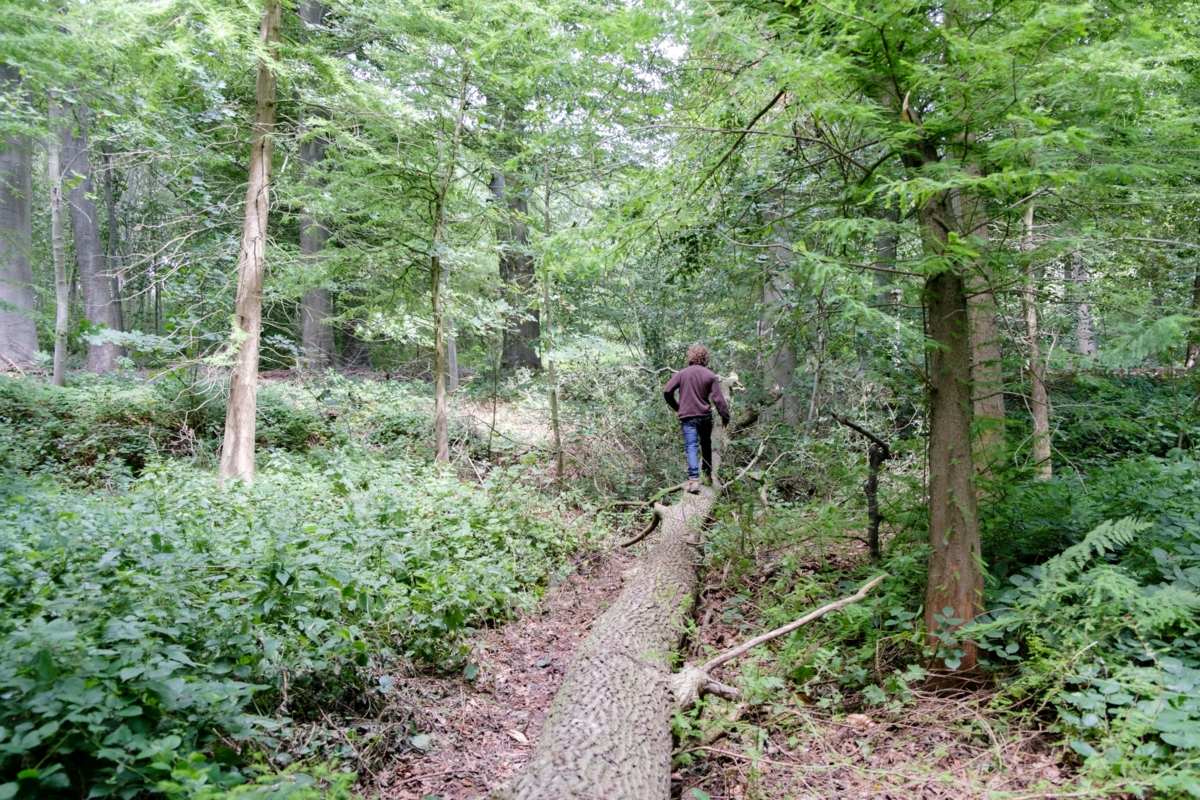
Do you remember that Max also told you something that stuck with you? That uprooting that tree was something between sculpting and archaeology for him? I asked him about that during our phone call. I already had all kinds of visual sympathies with that imagery, even before I spoke to him. It reminded me of something Michelangelo once said, I believe. That every image is already hidden in the marble and that you are actually carving out an image that is already there, that was already there. I asked Max if that was what he meant, but that was not the case at all. He said: "You cut into something, you cut something down, but at the same time you expose something, and once you cut, you can't go back. You can't 'uncut' anything."
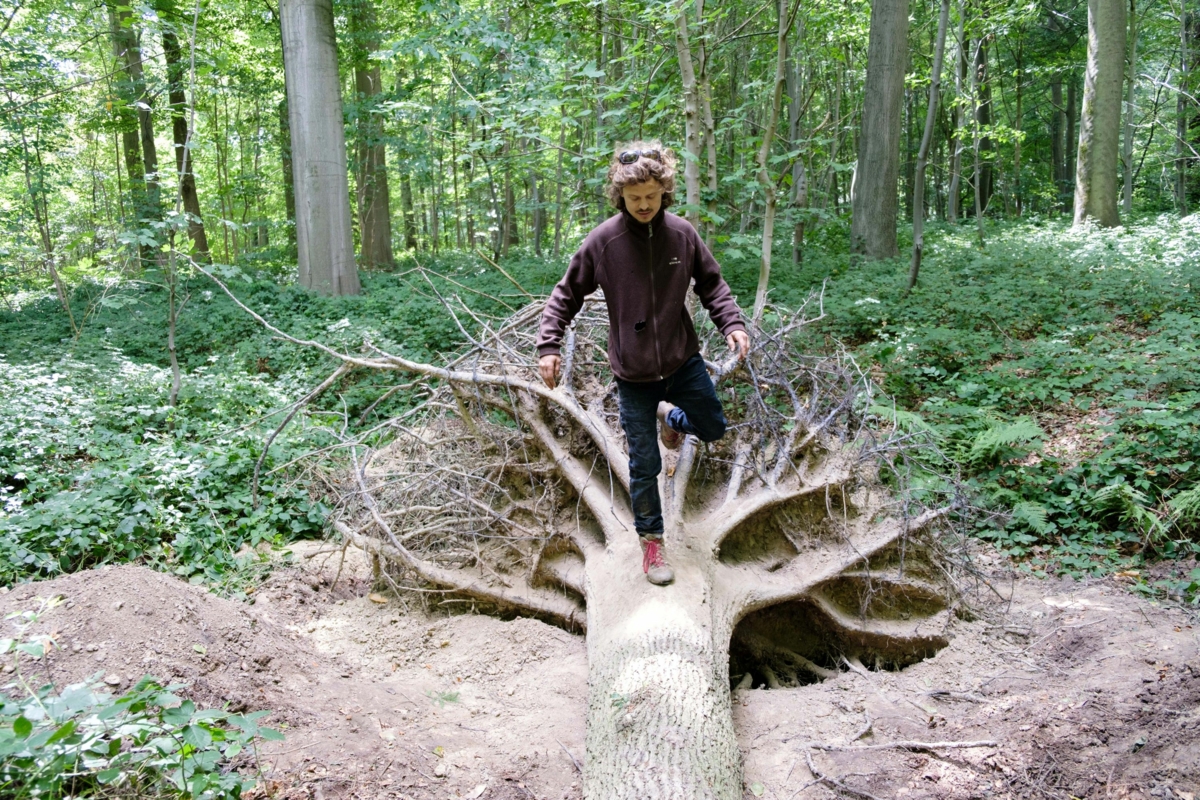
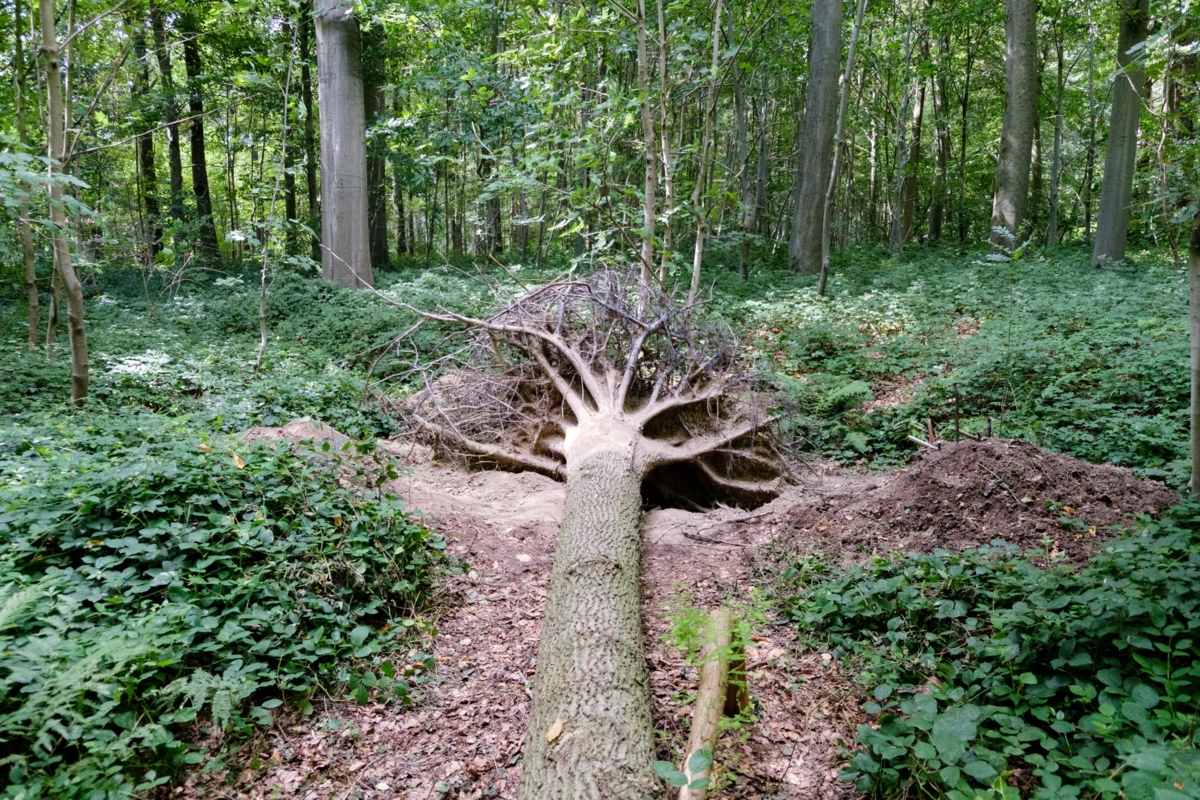
He told me that a friend had come to help him. And that friend was cutting quite vigorously and randomly. Things were progressing well because the tree's roots are still half in the ground. But Max actually wants to get those roots out of the ground without damaging them, or at least as little as possible. That friend had cut quite a lot and Max was a bit uprooted himself. That's how I felt. That's why he decided to leave the tree alone for a week. He's leaving the tree where it is, on the ground that is its foundation. We've agreed to meet again on Sunday, at my house, and then he'll start a new week.
That new week will begin with digging a well. A well that should expose the groundwater. He has already dug such a well and actually reached the groundwater. Next week he wants to dig a bigger one to better capture the event on camera. The first time didn't work out well. I thought it was nice that he would dig another well, just to be able to capture it.
The reason he wants to dig that well to reach the groundwater is because he needs that groundwater to soften the soil around the tree so that he can uproot it without damaging the roots. In the past, wells were sometimes built using hollow tree trunks. I'm not sure if he plans to do the same. I do know that he wants to use a hand pump. I happen to have one lying around, and perhaps it could help him build his well.
As I said, the soil around the tree is very hard, and without water it is difficult to remove the roots from the ground without cutting them. Perhaps it will be easier with water to soften the hard, petrified soil. He says that it doesn't really matter whether the roots are damaged or not, but that he would very much like them not to be damaged. Just as the earth was once stone, the soil around the tree has become petrified again. But that is technically meaningless and probably rather dramatic, according to Ignacio, I assume.
*Kim Snauwaert is part of the publication team at PLAN B/Veldwerk, where she talks to various artists together with Vincent Focquet. Leontien Allemeersch is the artistic coordinator of the PLAN B arts platform.
Text: Kim Snauwaert - Image: Leontien Allemeersch
With Die malle Jan, Max Pairon wants to transport an oak tree felled by a storm to Ghent by himself. He wants to use this project not only to collect stories, but also to reflect on how we as humans deal with materials and transport. During this journey, he therefore wants to challenge passers-by who cross his path to change their plans and take part in this trek. The tree will ultimately serve as a load carrier for a new floor in the studio of De Koer, a social and artistic organisation in Ghent.
Read more about the project here.