Notes from Areal III: The rural and the other & The rural within
Hosted by TAAT in The Green Corridor Saint-Gilles
Areaal is a learning network focused on artistic practices outside the city. In 2022/23, Areaal will consist of the architecture and space platform AR-TUR, the intermunicipal collaboration GINTER, the art space for co-creation, craftsmanship and diversity Manoeuvre & laboratory for contemporary transdisciplinary art nadine, the loose-fixed art collective Seasonal Neighbours, the practice for soft power and radical imagination DEVET, and the performance-spatial collective TAAT. In addition to the network's core partners, artists participating in the Fieldwork Programme supported by the PLAN B Arts Platform and those interested in the specific theme of the day are invited to participate in the meetings.
Each meeting is organised around a theme chosen by one of the participants in the network. The aim of these meetings is to share practices and experiences with creating and supporting artistic work outside the city with each other and with the affiliated artists. This creates a fabric of shared knowledge about art and/in rural areas and hopefully generates more fertile ground for artistic practices in rural environments.
The third Areaal meeting was a collaboration with TAAT: collective for performative, spatial practices and artistic research. They shared their open source methodology with the Areaal participants. The meeting took place on 19 November in the artist-run space The Green Corridor in Saint-Gilles, Brussels. The research question centres on the question of what rurality means and where we can find it in ourselves and in the city.
1. Introduction to TAAT
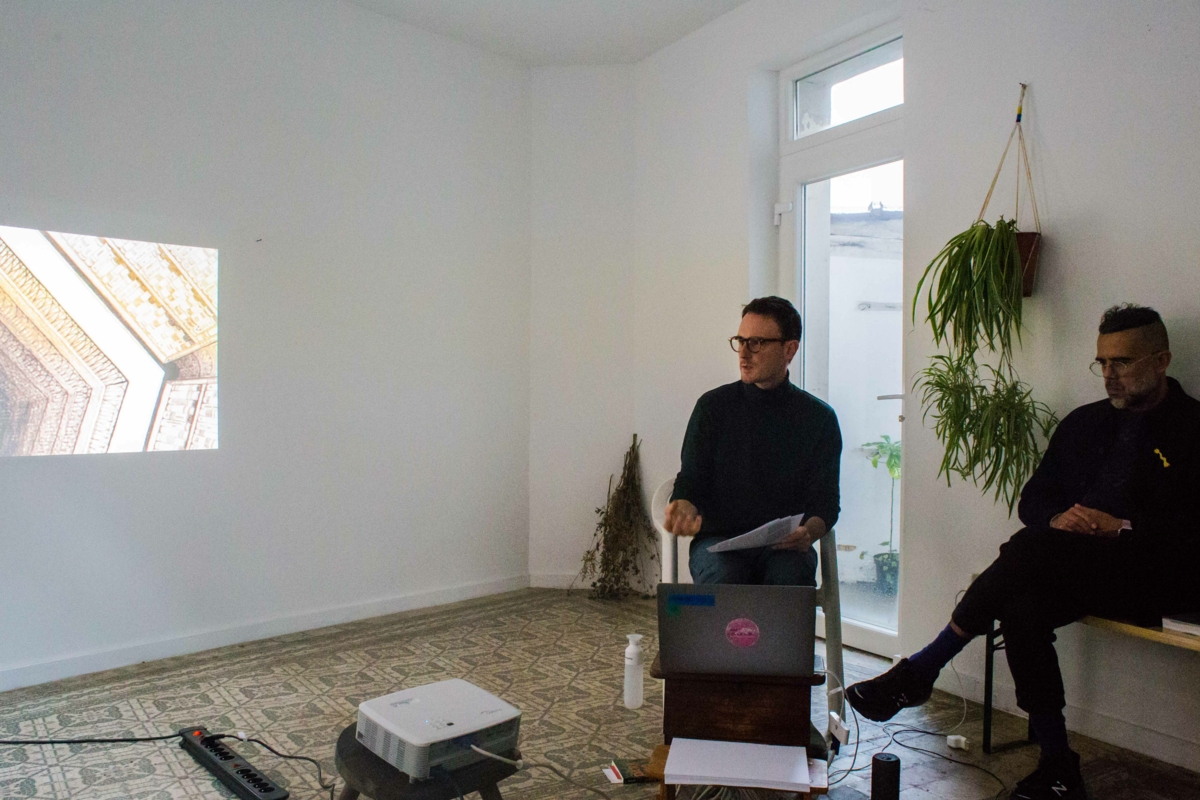
First, Breg Horemans introduces TAAT's practice, which evolved from wooden installations in cultural institutions such as HALL03 in Kortrijk to a practice that moves outside the space and works with materials that are available there. The Sengu project that TAAT carried out in Bokrijk, in which the materiality of wood and the collective were leading factors in the design and construction process, is a striking example of this. Their process of building together according to regenerative methods forms the basis for the rest of the day.
2. Writing exercise: the rural within
Inspired by Jorge Luis Borges' 1941 story The Library of Babel, Breg proposes an initial exercise in which we try to see our bodies as archives. In those archives, we search for a rural space that has defined us. In twelve minutes, we draw that space and describe it. We then share our spaces with each other.


3. Encounter Portal Workshop
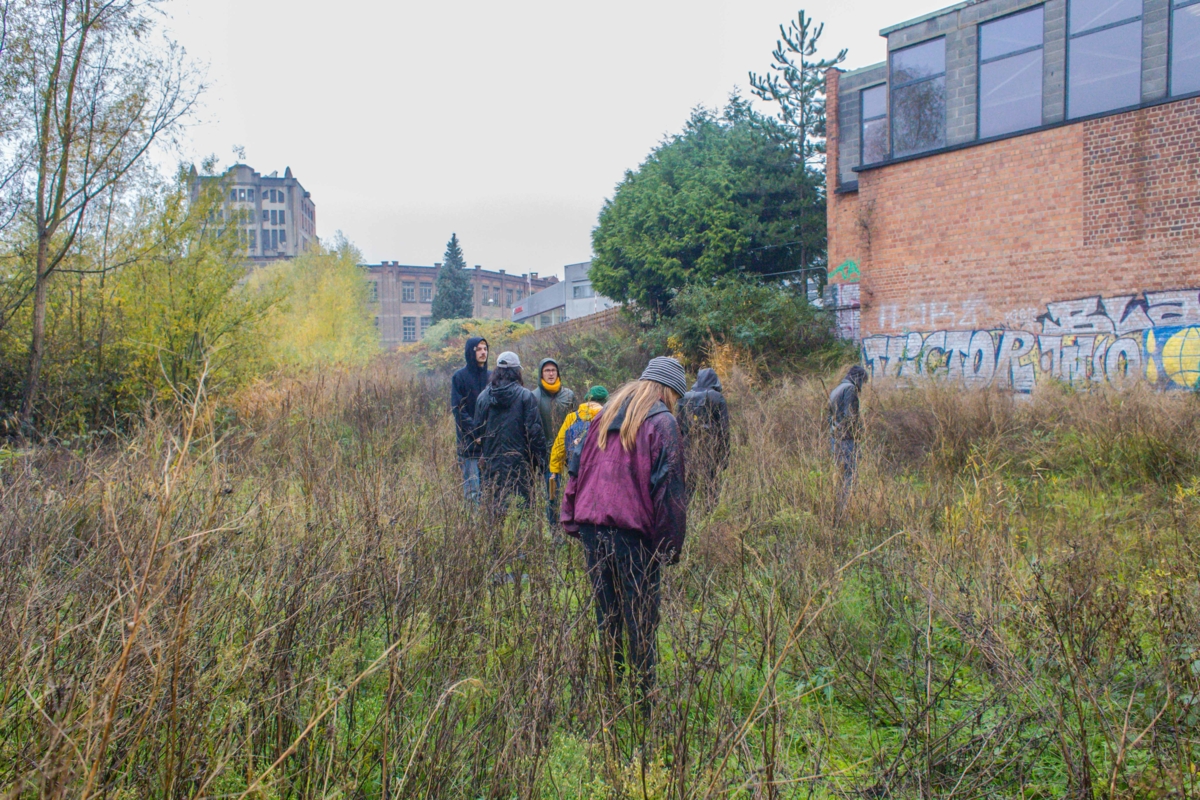
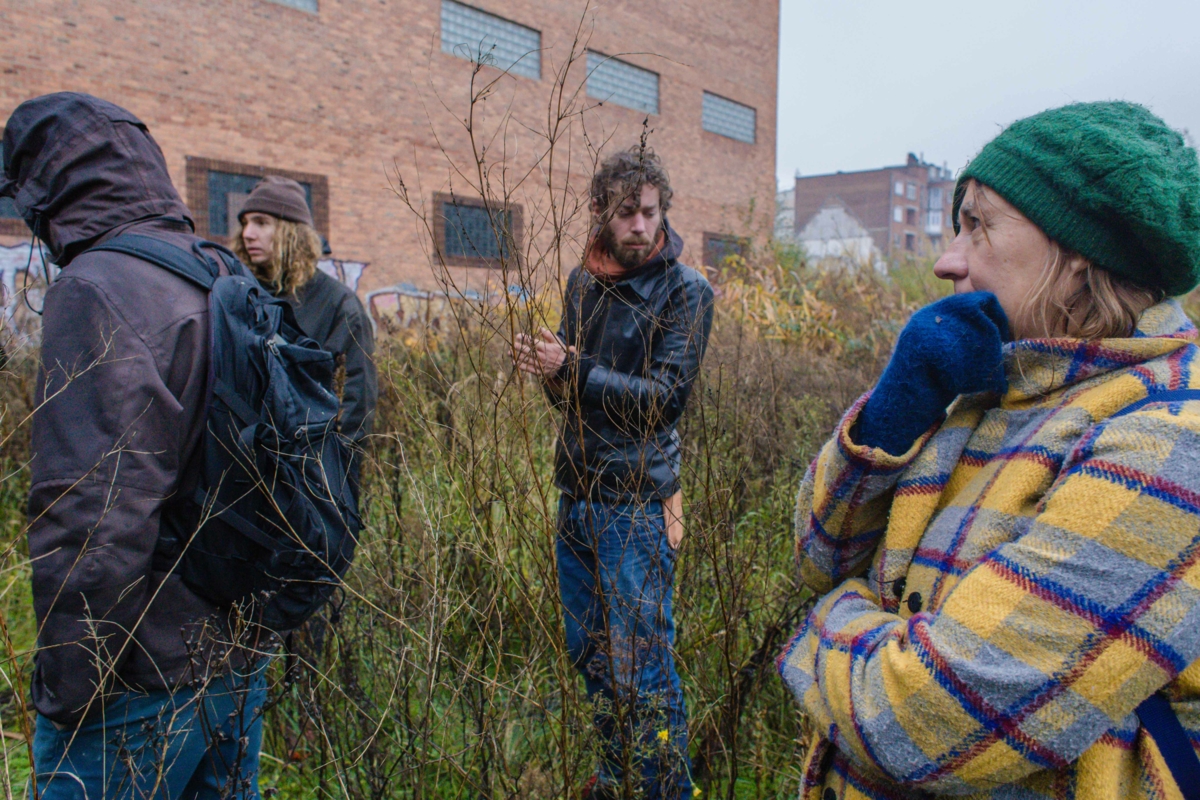
After lunch, we focus on the question of whether we can also recognise the rural in the city. We walk to a vacant lot near the canal in Anderlecht. There, Breg leads an Encounter Portal Workshop, which focuses on how spaces shape relationships between ourselves and multiple Others. In silence, all participants make their way to the heart of the site with the help of wire cutters. Once there, a portal is constructed in a number of steps by creating spatial elements with the materials available on site: plants, thorns, puddles, discarded plastic waste, rubble. In a final step, an encounter takes place in the portal between all participants and their environment.
ORGANISER
TAAT
TAAT operates as a performative spatial practice between architecture, performance and artistic research. At the core of their work is the HALL33 project, a building that is a theatre piece, and a theatre piece that is a building. HALL33 facilitates encounters between the public, institutions, practitioners, researchers and students, and has been unfolding since 2012 as 'rehearsals through space'. All TAAT projects are set up within an open source methodology based on a collective learning-by-doing approach.
https://taat-shadow.netlify.app/
PARTICIPANTS
Breg Horemans (TAAT), Joris Derycke, Lucas Devolder, Lola Daels & Sebastiaan Willemen (Veldwerk), Chris Rotsaert (Manoeuvre), Edith Wouters (AR-TUR), Juan Duque & Sam De Vocht (The Green Corridor), Leontien Allemeersch, Ewoud Vermote, Vincent Focquet (Kunstenplatform PLAN B), Julie Van Kerckhoven, Betül Sefika.
All photos by Leontien Allemeersch