Ten Gronde report: Agriculture (Arts & Zwalm)
Ten Gronde – voices from agriculture and society
About the way we farm and what this says about our times.
Sunday 14 September – Het Groene Lilare, Zwalm
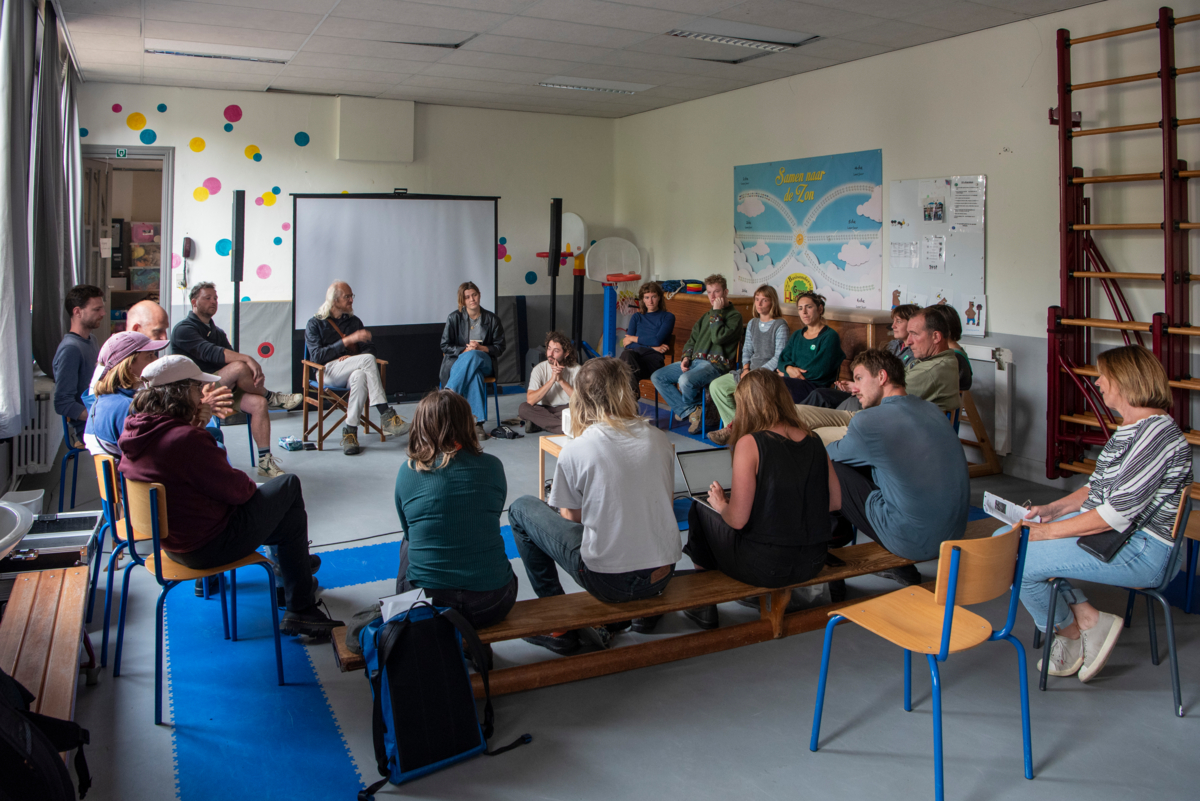
On Sunday 14 September, arts platform PLAN B invited artists, farmers and the public to discuss the hot topic of 'agriculture'. This was part of Kunst & Zwalm, which we co-curated and organised for one edition.
Today's modern farmer has a lot on their plate: nitrogen agreements, European regulations, sky-high investments to survive, and on top of that, the climate crisis. The farmers' protests of recent years have been met with a great deal of understanding in society, but at the same time they raise questions: how sustainable is this agricultural model? What alternatives can we come up with?
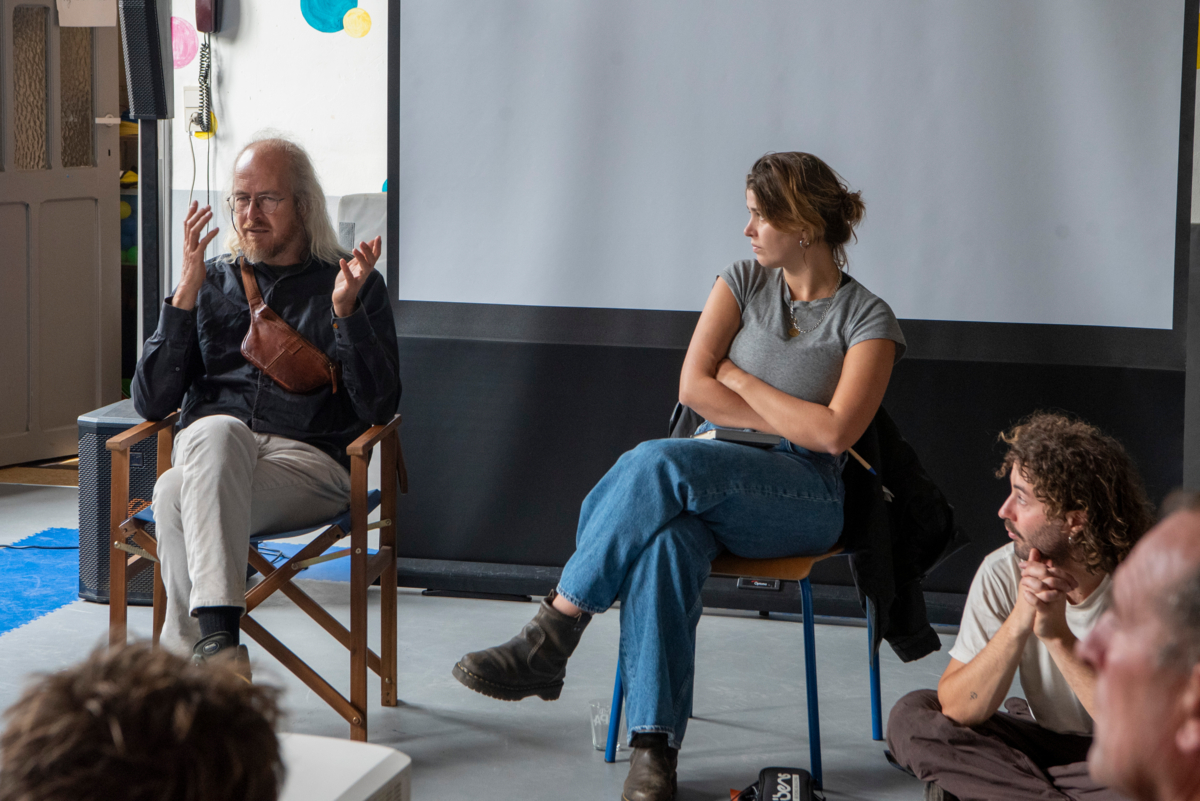
We discussed these issues with theatre maker Martha Balthazar, who created a performance on the theme with Boerenpsalm (Farmers' Psalm), Tom Van Canneyt, alderman for Agriculture in Zwalm, and Karel Houdmont, founder of the Ourobouros organic farm. The panel was introduced by Pierre Creton's short film L'avenir le dira (The Future Will Tell).
A table with many voices
"Without land, you can't farm," was the sentiment expressed during the discussion. From this simple truth, a layered debate unfolded about land, responsibility and the future. Ten Gronde — Martha Balthazar's performance on which this discussion is based — is four years old, but its theme remains relevant. The work brought together a multitude of voices, and this principle was also reflected in the discussion: a table full of voices, without party political strife, but with room for nuance, conflict and imagination.
Areas of tension in focus
The panel made clear how complex agriculture is today. Various areas of tension came to the fore:
- Scale and vulnerability: large investments make farmers dependent on international markets and vulnerable to sudden shocks, while small-scale farmers have more flexibility but face high labour costs.
- Appreciation and invisibility: farmers experience a lack of social recognition. Their seasonal, often invisible work remains undervalued, while appreciation requires more than subsidies alone.
- Farmers and citizens: the gap between producers and consumers is growing. Yet short supply chains, markets and stories show that connection remains possible when citizens consciously choose local products.
- Countryside and city: city dwellers who settle in the countryside sometimes clash with agricultural practices, from night-time harvesting to odour nuisance. Mutual respect is essential for living together.
- Agriculture and policy: regulations and paperwork weigh heavily on the sector. Policy choices regarding land use and subsidies often favour large-scale companies and increase polarisation between agriculture and nature.
Building bridges
At the same time, opportunities also emerged. There are many ways to forge new connections: cooperatives in which consumers participate, education that reconnects young people with food production, or policy measures that make entry into the profession more accessible to different generations.
Agriculture not only affects the market, but also issues such as healthcare, education and community. The discussion clearly showed that agriculture is a shared social responsibility.
The future remains open
The question 'Who will feed the world?' was a recurring theme throughout the discussion. For some, the answer lies in efficiency and economies of scale, for others in organic farming and short supply chains. There is no ready-made answer. What is certain is that the sector is changing rapidly, knowledge is at risk of being lost, and the social urgency is increasing.
Ten Gronde today
Four years after the creation of Ten Gronde, the themes feel both topical and outdated. Topical, because land, appreciation and responsibility have lost none of their importance. Outdated, because new crises — nitrogen, protests, climate — have shifted the reality in the meantime.
But perhaps that is precisely the strength of both the performance and this conversation: not to offer solutions, but to reveal the complexity and open up space for dialogue. After all, agriculture is not just about farmers; it is about how we deal with land, food and the future together.