The periphery of the city, and the periphery of the three dimensional Aerodata representation - Fieldwork
Letter to Vincent
Dear Vincent,
I hope you are having, or have had, a good journey.
Stay away from confused Belgium for a while and enjoy the countryside over there.
Apologies for the radio silence, I was once again bogged down documenting the process.
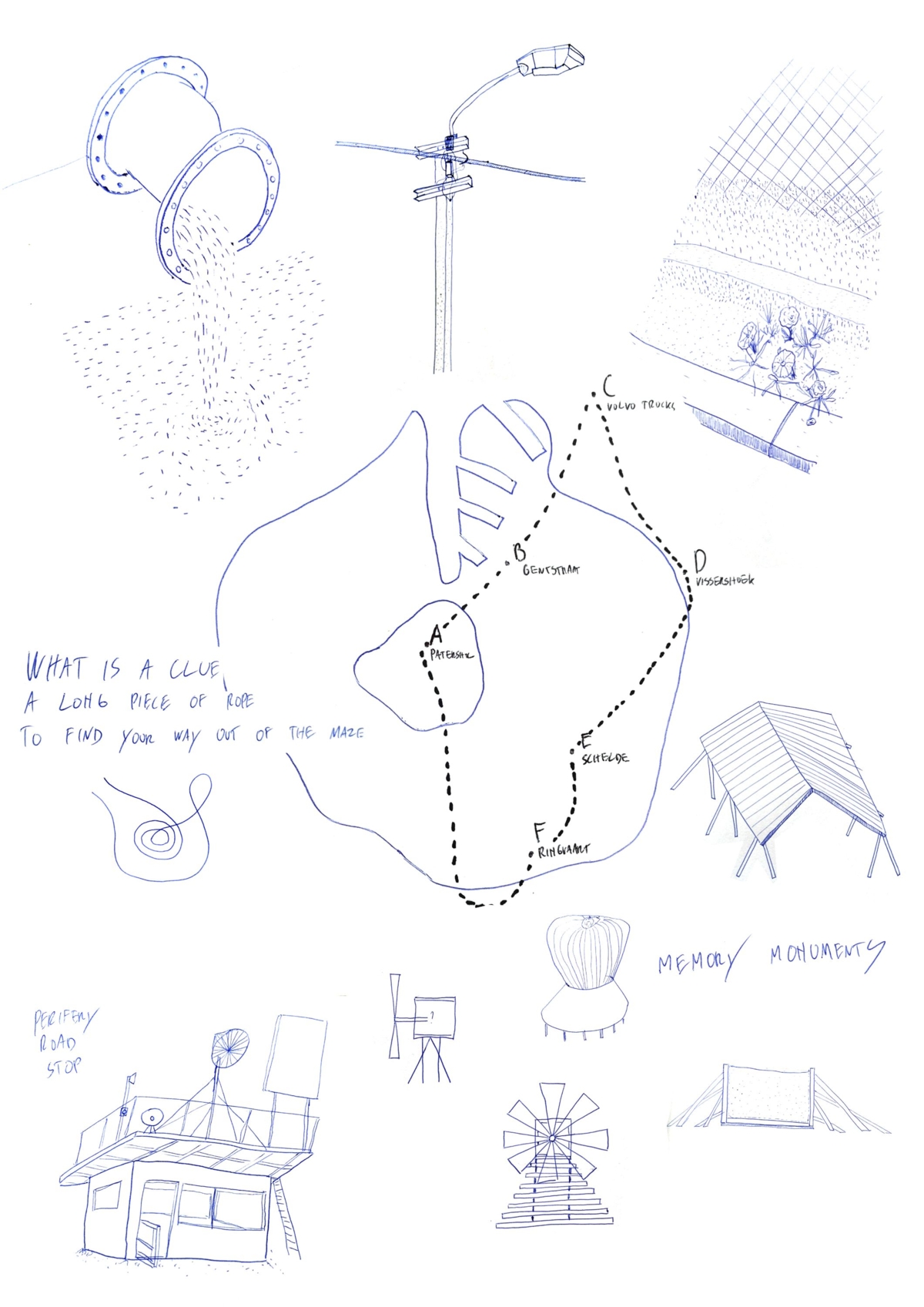
I have compiled some sketches I made over the past month (see attachment). They are interpretations of what I saw, either at the time or later, as well as simple structures that come from my memory and that I like to put on paper for the fun of it. I thought it would be interesting to think about what happens when they are compiled, what it means when those structures come together, and why on earth am I writing them down? I would like to make many more: I find the idea of creating a subjective database without absolute parameters appealing.
This week I went on a few field trips. They weren't necessarily fruitful – I can sense that when I'm on my way – but I go anyway. It's becoming increasingly clear that the places that attract me, and where I immediately get a good gut feeling, can be found in ports and industrial areas, and by extension the buffer zones around them. I don't quite understand why I like them so much. I suspect it has to do with the multitude of mixed landscapes and the fact that I find them very inspiring.
But so, against my better judgement, I also found it fascinating to explore the edges of urbanity and suburbia.
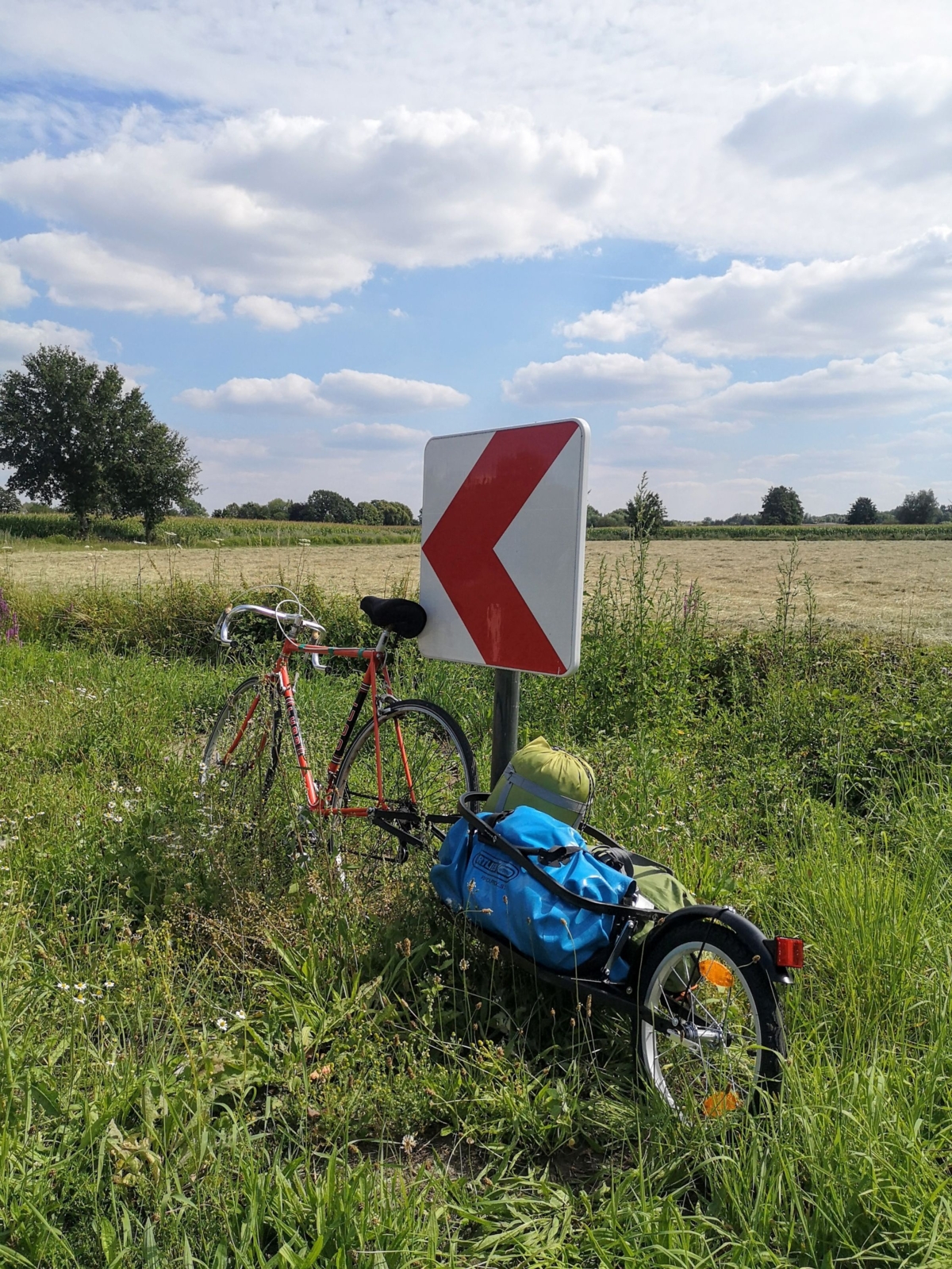
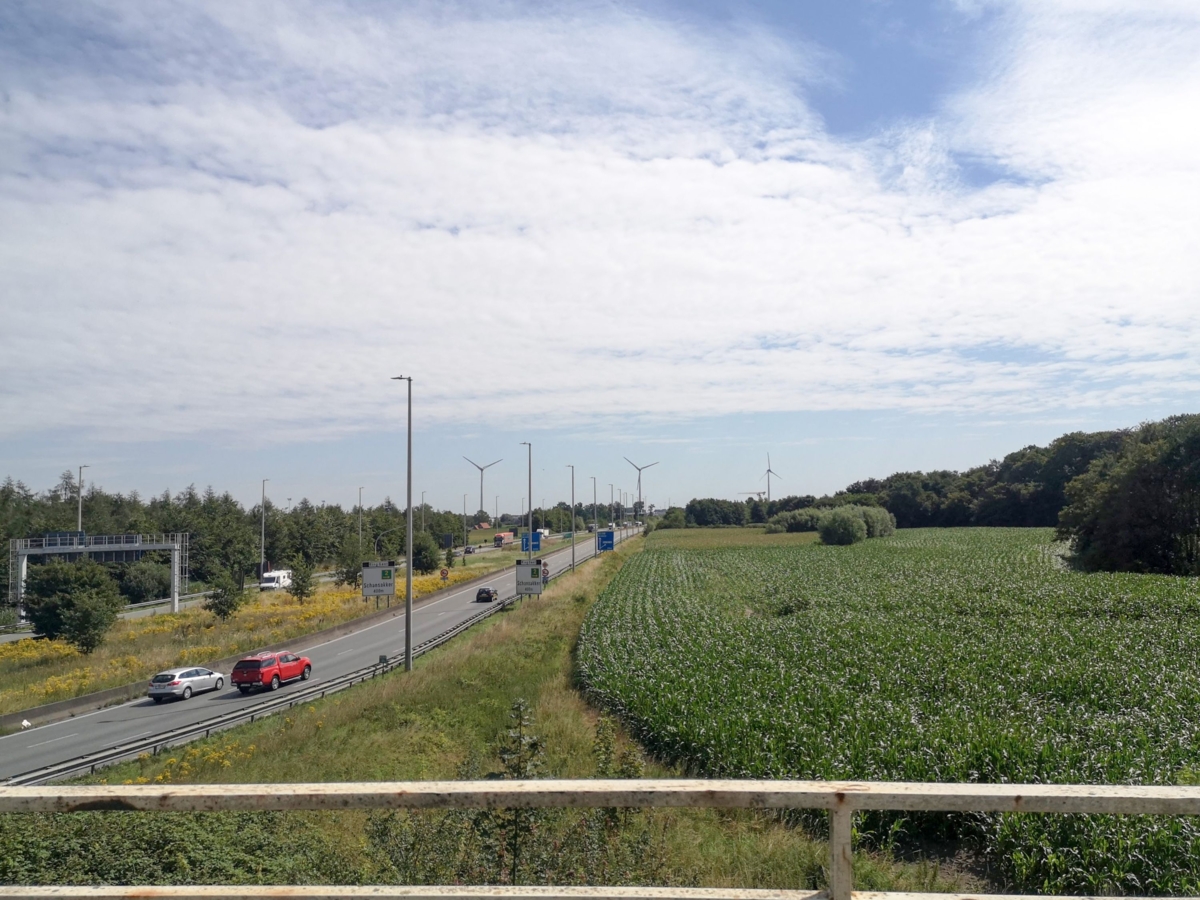
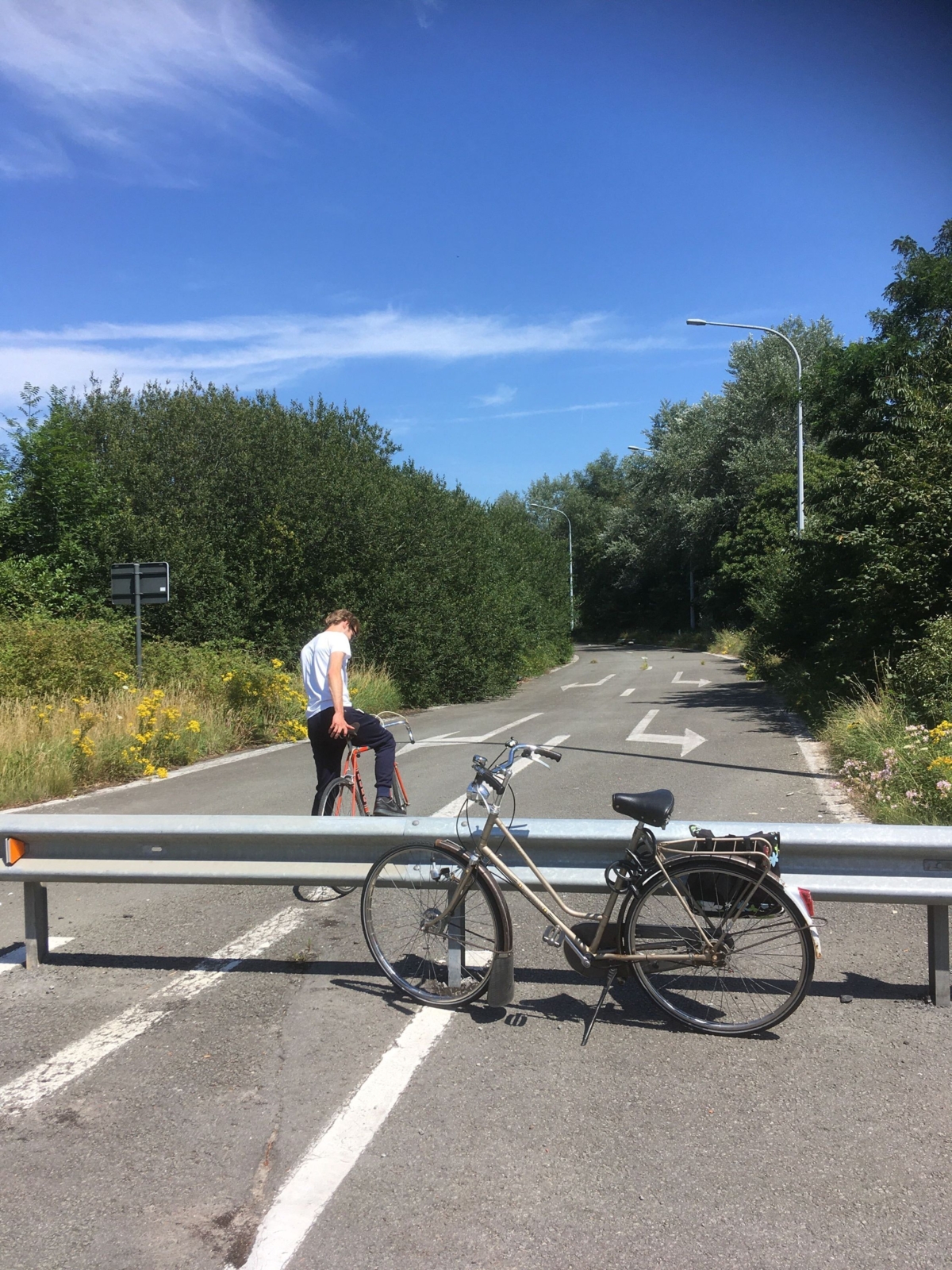
For example, I cycled around the R4 ring road in Ghent, like a snake coiled around it, crossing over the R4 each time to visit both sides with equal attention.
I wanted to know whether that boundary was hard – although it soon became clear that in many places the real boundary between urbanity and rurality lies before the ring road, filled in by the delightful Belgian sprawl.
The area around the Scheldt near Melle has stayed with me. There is a grandeur of planning involved, and you can certainly see that. The 'Anthropocene' is evident, of course, ha, the very wide Scheldt there has been moulded with various buffer zones and dams next to a beautifully constructed cycle path with neat fields and towpaths around it, with church towers in the background. I suspect it appeals to me for the same reasons that industrialisation appeals to me.
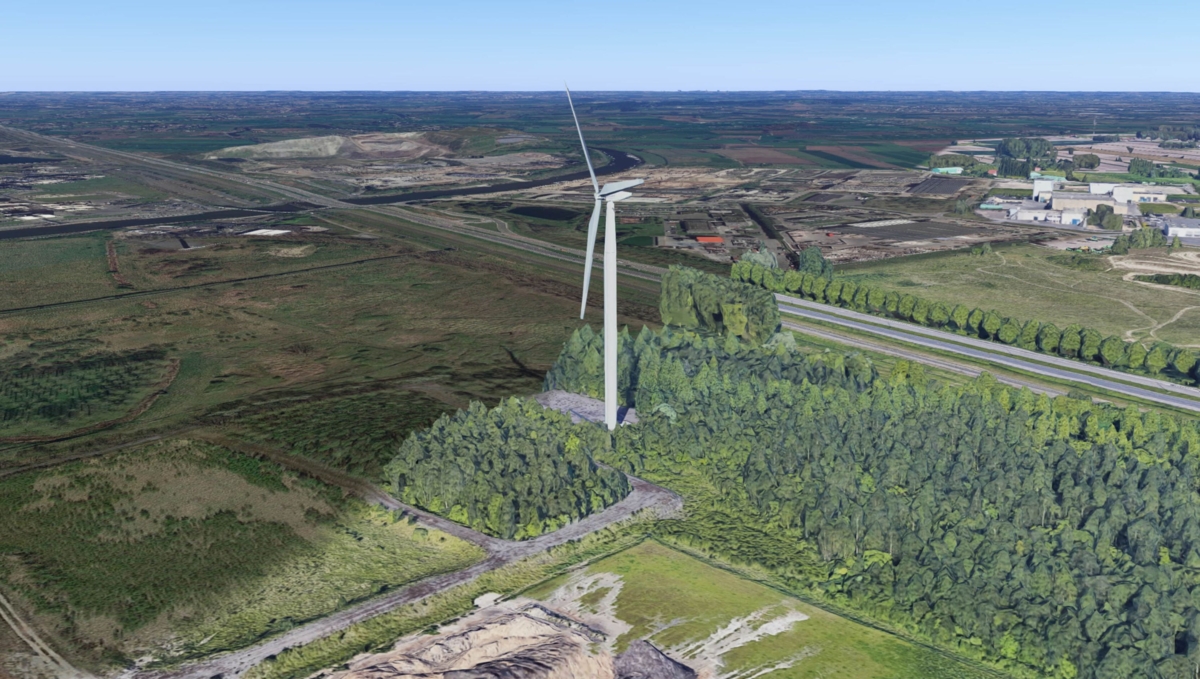
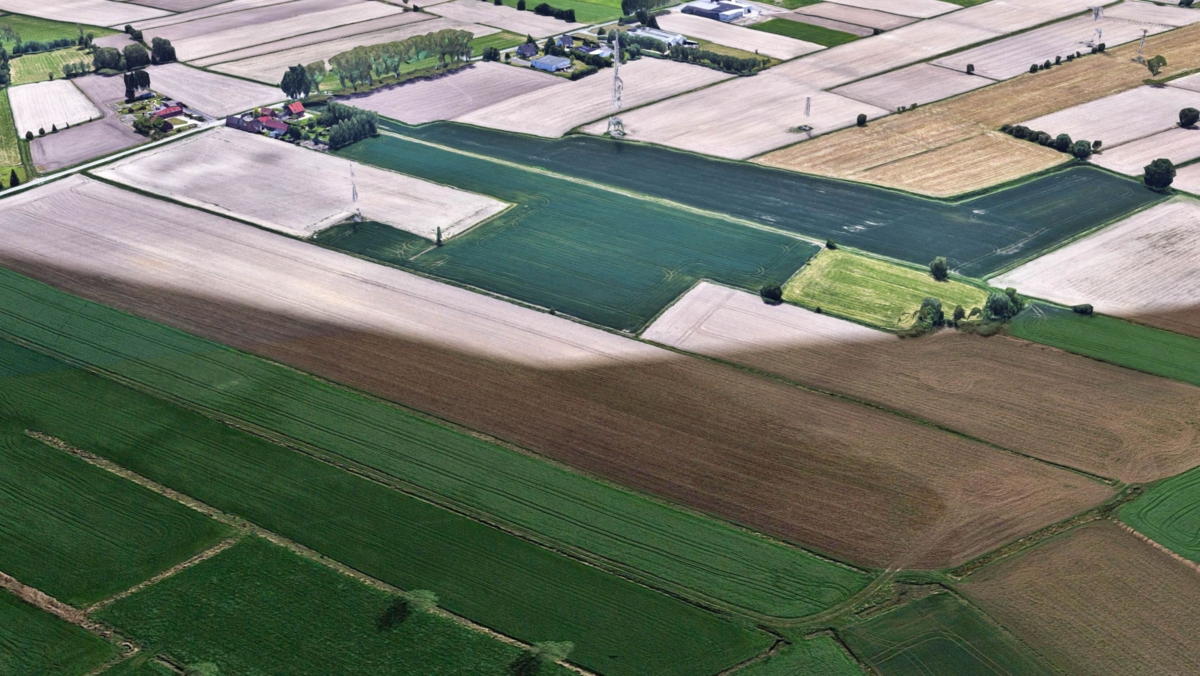
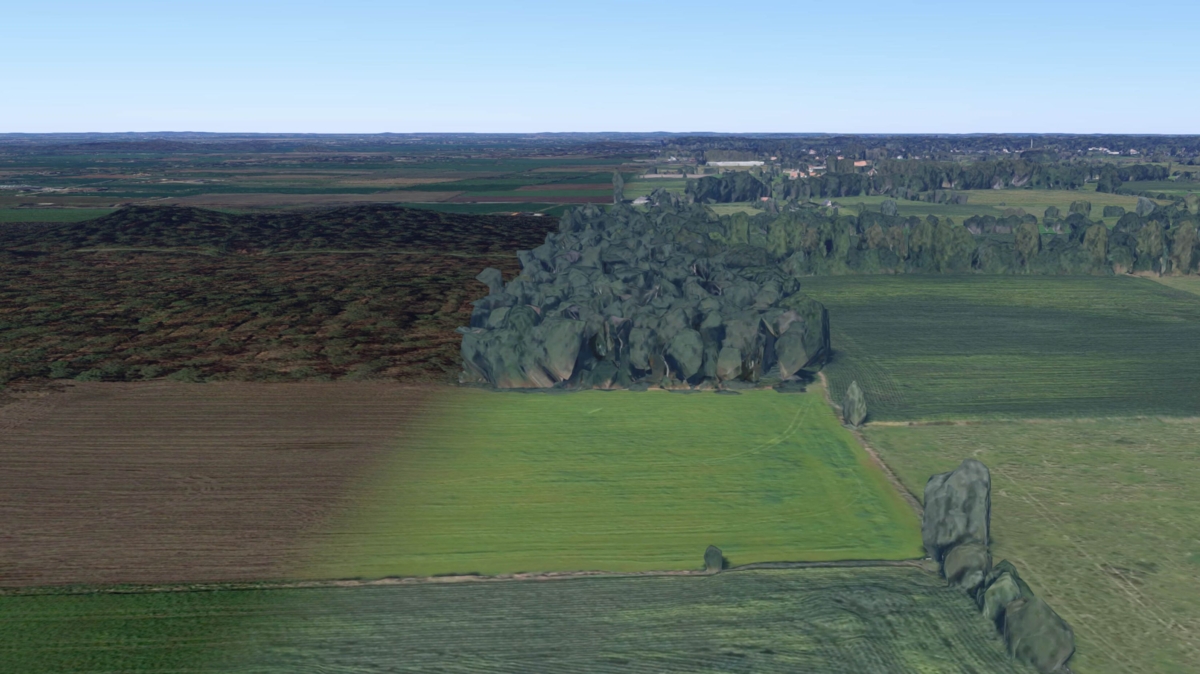
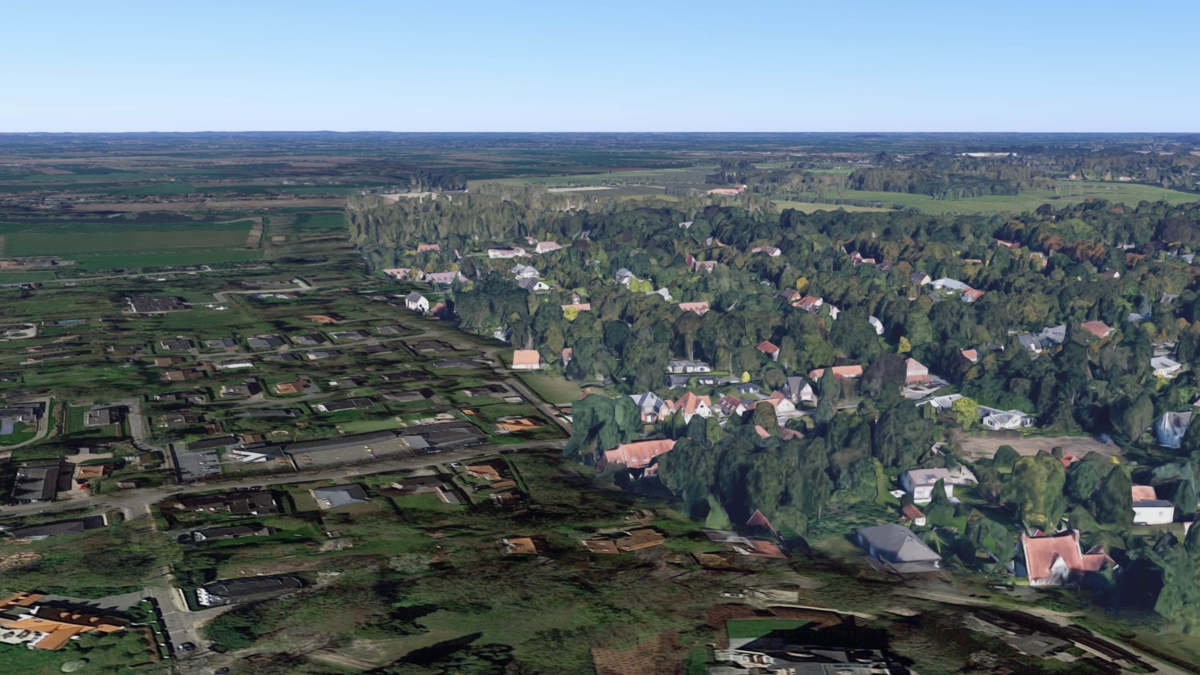
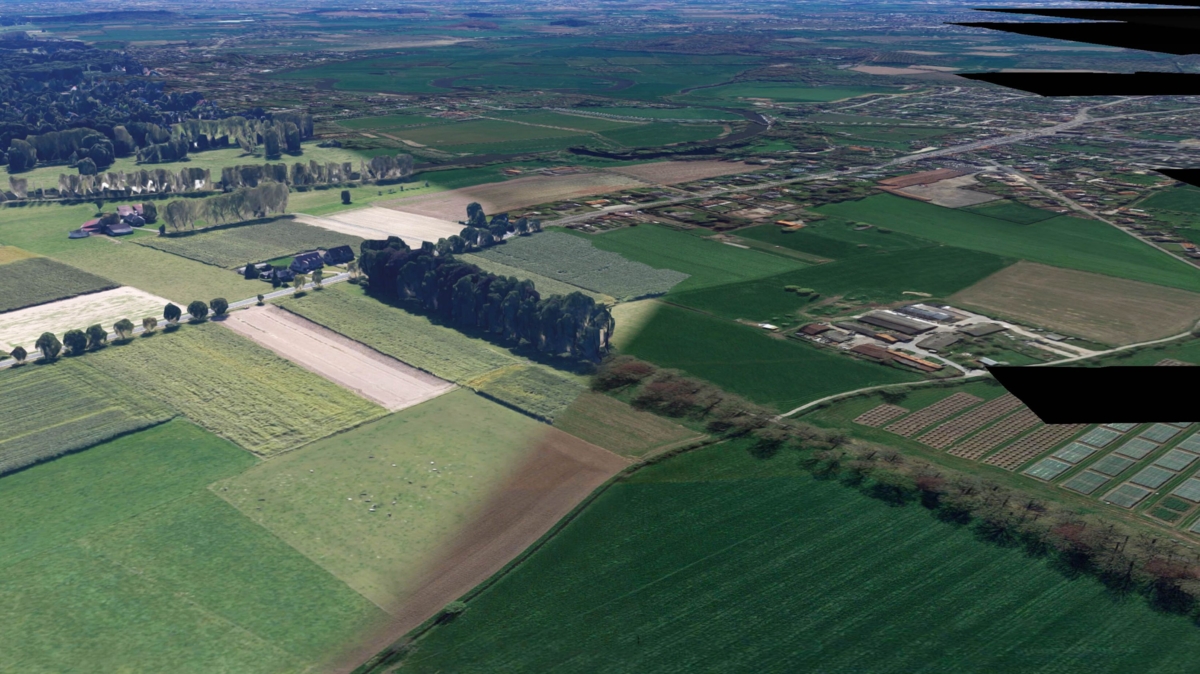
I also did a brief study of the city's periphery in the digital representation of the city of Ghent, using satellite images (see below, ed.).
This is a completely different approach (top-down) to the way I normally work. It helps to create an overview, make meta-connections, and dive into the field in a more targeted way...
Another piece that I found very valuable was Eva Schmidt on Remembering Landscape:
"Landscape remembers, and we remember landscape.
Memories are embraced by landscape, but they also begin with landscape. We need a memory of things past in order to understand the present and to shape the future.
Perceived landscape is a precondition to cultural awareness. Being embedded in landscape is a precondition to orientation, exchange and community. In the following there will be frequent reference to the aesthetic - production of contexts. Contexts enable memories and, vice versa, memories create contexts. By contrast, a lack of context - caused by financially based interventions, the drawing and redrawing of borders, flight, war, uncontrolled development and technological megalomania - promotes forgetfulness and suppression. A lack of context signifies devaluation. Context signifies valuation."
I also recently read something by Pierre Nora (Les Lieux de Mémoire) that struck a chord with me, about the difference between history and memory.
A few sentences I wrote down:
"The acceleration of history confronts us with the brutal realisation of the difference between real memory – social and unviolated, exemplified in but also retained as the secret of so-called primitive or archaic societies – and history, which is how our hopelessly forgetful modern societies, propelled by change, organise the past."
"Memory and history, far from being synonymous, appear now to be in fundamental opposition. Memory is life, borne by living societies founded in its name. It remains in permanent evolution, open to the dialectic of remembering and forgetting, unconscious of its successive deformations, vulnerable to manipulation and appropriation, susceptible to being long dormant and periodically revived. History, on the other hand, is the reconstruction, always problematic and incomplete, of what is no longer. Memory is a perpetually actual phenomenon, a bond tying us to the eternal present; history is a representation of the past. Memory, insofar as it is affective and magical, only accommodates those facts that suit; it nourishes recollections that may be out of focus or telescopic, global or detached, particular or symbolic—responsive to each avenue of conveyance or phenomenal screen, to every censorship or projection.”
I will continue, Vincent. I do not yet know where I will end up. I do not yet have a specific work in mind. I do have ideas, interactions, scale, materials, forms... but nothing that convinces me at the moment. There has not yet been a (lasting) eureka moment.
What is currently on my mind:
I want to invite people to think and try to understand the landscape further, as well as our relationship with it and how it influences our zeitgeist (and vice versa).
I don't want to do this with an all-encompassing, pretentious intervention, but by taking a specific example and bending it into a point of interest that strings together space, time and reality like a vacuum through associations.
For that associative reason, I also like to think about subjective memory versus collective memory: who remembers what and how? What do we see when we close our eyes and think about a specific place? We certainly don't all see the same thing.
The inspiration for that structure may come from the history of the place, but it may just as well tell a story through the disconnect between the place and the new structure. I haven't made up
my mind about that yet, and I suspect it will most likely happen through a series of coincidences.
I look forward to hearing your thoughts and a report of your journey.
Best regards,
Bert
* Vincent Focquet is part of the publication team at PLAN B/Veldwerk, where he and Kim Snauwaert engage in conversation with various artists.
As part of Veldwerk, artist Bert Villa is conducting research into his own mental blueprint with Memory Landscape. This has resulted in Assembly: a book that takes the reader on an associative journey through constructed landscapes, navigating the boundaries between artistic, functional and spontaneous constructions and everything in between.
Read more about his project here.