The Research Plan / The Research Plan: Karolina Michalik
ENGLISH BELOW
This interview is part of a series of interviews conducted at the start of Veldwerk II. They offer a glimpse into the practice of the six participating artists/collectives and explore the way in which they approach their research projects. You can also follow the rest of their journey on this website. Here, Karolina Michalik talks about her project 'perpendicular parallels'.
My project for Veldwerk starts from labour migration and the relationships that arise between two places. I was already working on this subject with another collective, Seasonal Neighbours, which focuses specifically on this theme. During that research, I came across an advertisement from a Polish recruitment agency for mushroom farms. It described how the mushrooms are picked by gentle female hands and how important that is for this fragile work. It sounded strangely poetic and at the same time completely absurd. This raised certain questions: What kind of poetics is this, used for economic purposes? What does it imply that these Eastern European women are picking mushrooms on a farm in Flanders? All the more so because this is part of an important rural tradition in Poland. Picking wild mushrooms is a family activity there, one that many people spend their free time doing, while in Flanders it is strictly forbidden. Does the presence of those Polish hands only mean that the mushrooms are of the highest quality, or can I also say that Polish folklore and culture are present in the farm's surroundings, embodied by them?
That connection between two places opens up a lot of possible links and even more gaps. I find that an interesting area for research. As a child of first-generation Polish migrants, raised in the US, I have to negotiate my place within this dynamic. I would call it an ongoing fascination with how migration creates situations in which cultures are exchanged or connected, or how they remain separate.
My practice focuses more on the rural than the urban environment. By that, I don't mean the pastoral, idyllic image that many people associate with it, but the countryside as an area of change, political and social issues, complex interactions and diverse dynamics.
This began during my master's degree in Social Design, when I started researching socio-cultural issues in Poland. The rural mental image that exists there does not correspond at all with reality. Take, for example, the annual harvest festivals, a popular tradition attended even by the presidential couple. They celebrate grain that is no longer harvested by people, not even at that time of year. At the same time, there are large farmers' protests in their own country and thousands of Poles work in foreign fields as seasonal workers... It is an obvious contradiction that forms the core of my projects for Seasonal Neighbours and Veldwerk.
In the public representation of modern Polish rural identity, folklore is a colourful instrument of political propaganda. This propaganda aims to enable and maintain a selective interpretation of the past and present, based on nostalgic and religious patriotism. Contemporary dynamics such as seasonal work or complex European regulations are ignored in this narrative. This is inextricably linked to Polish identity: being Polish means identifying yourself with the country. This has to do with many things, first and foremost the communist regime, which prohibited private property. The image of home, tree, baby, etc. became very important in proving your identity as a Polish citizen. But then the pendulum swung to a kind of patriotic act.
When I visited Poland with my parents as a child, there was always a nostalgic fantasy in the air. And although I considered myself Polish, I was simultaneously excluded because I did not fit the image of that identity; I was not part of that quest. Claiming your part of that identity is a very complex thing.
For me, a research process starts very fleetingly; it even evolves as I speak during this interview. That changes when I switch to fieldwork. For this project, that's when I start working at a mushroom farm. Then comes the moment when I confront my ideas with reality. You quickly see which questions linger and which are no longer relevant. But for that process, you have to be completely open, let in all kinds of input, and engage in a socio-cultural context. This creates an iterative framework in which your initial ideas are constantly renegotiated. I think that's what I'm looking for in research: a personal continuity of research, a trajectory. Even if I am proven wrong from point A to point B, I want to know why I was wrong and create something based on that.
I constantly renegotiate my different roles as a researcher, artist and child of Polish migrants. When I come in as an artist-researcher who wants to know everything, that role is very quickly seen through and not always very welcome. When I started working at a fruit company in Poland for the Seasonal Neighbours project, that was an important lesson. I asked a lot of questions and the reaction made it clear that I was overstepping my bounds. So I learned that it is better to take a more detached attitude and then see what conversations come your way. Nor could I fully play the role of a Polish citizen. Of course, I could tell them where I came from, but because I grew up in the US, that was very different from the people I was interacting with. Once you have built a relationship through everyday interaction, you can start sharing stories.
For me, the relationship with local communities is not so much about seeking interaction, but more about collaboration. I want to explore the possibilities of what collaboration can mean. You can start a conversation about an important topic, but perhaps you are not the right person to have that conversation, or your conversation partner is not ready to have that conversation. I feel a strong urge to collaborate with the people I meet who have a different background from me. At the same time, it is something I don't have a lot of experience with yet. I hope to really take that step this time.
I want to explore whether my journey can lead to a film. My methodology is closely linked to film anyway: immersing yourself in a setting and seeing what story emerges, coming in with questions and not with pre-packaged answers. I have the idea of creating a portrait of a connection between two places. The fiction then arises in the space that connects those two realities.
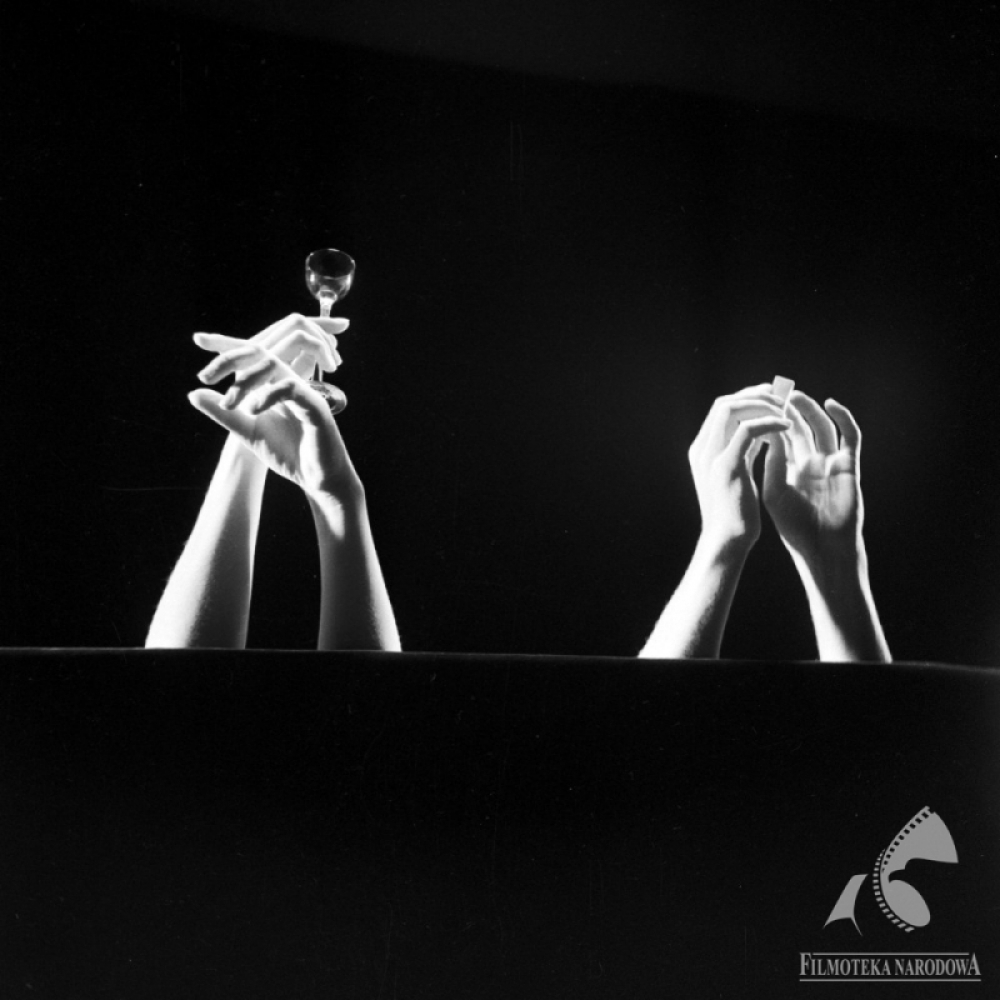
This image shows a 'hand theatre' from the Polish film Do Widzenia, Do Jutra by Janusz Morgenstern. It is a post-war film celebrated for its simple portrayal of the collective social mood of the time. The protagonist uses his hands to tell stories that he cannot otherwise share. It reminds me of the website of the Flemish mushroom farm that describes the 'fine and soft fingers' of the female pickers as a guarantee of product quality. I wonder what other stories these hands could tell.
ENGLISH
This interview is part of a series of interviews conducted at the start of Fieldwork II. They offer a glimpse into the practice of the six participating artists/collectives and sound out the way they start their research project. On this website, you can also follow the rest of their trajectory. Here's what Karolina Michalik has to say about her project 'perpendicular parallels'.
My project for Fieldwork starts from labour migration, and the relationships it creates between two places. I was already working on this topic with another collective, Seasonal Neighbours, which focuses specifically on this theme. During that research, I came across an advertisement from a Polish mushroom farm recruitment agency. It described how the mushrooms are picked by gentle female hands and how important that is for the fragile work. It sounded in a strange way poetic and at the same time totally absurd. It raised certain questions: What kind of poetics is this, used for economic purposes? What does it imply that these Eastern European women are picking mushrooms on a farm in Flanders? Especially since this is part of an important rural tradition in Poland. Picking wild mushrooms there is a family activity that many spend their free time on, whereas in Flanders it is strictly forbidden. Does the presence of those Polish hands only mean that the mushrooms are of top quality, or can I also say that Polish folklore and culture are present in the surroundings of the farm, embodied by them?
That connection between two places opens up a lot of possible connections and even more gaps. I think that's an interesting place for research. As the child of first-generation Polish immigrants raised in the U.S., I have to negotiate my place within this dynamic. I would call it an ongoing fascination with how migration creates situations where cultures are exchanged or connected, or how they remain separate.
My practice focuses more on the rural than the urban environment. By this I do not mean the pastoral, idyllic image that many people associate with it, but the countryside as an area of change, political and social issues, complex interactions and diverse dynamics. This started already in my master's degree in Social Design, when I began to investigate socio-cultural issues in Poland. The rural mental image there is not at all consistent with reality. Take, for example, the annual harvest festivals, a popular tradition that even the presidential couple attends. People there celebrate grain that is no longer harvested by humans, even at that time of year. At the same time, there are major peasant protests at home and thousands of Poles are working in foreign fields as seasonal workers... It is an obvious contradiction that lies at the heart of my projects for Seasonal Neighbours and Veldwerk.
In the public representation of modern Polish rural identity, folklore is a colourful tool for political propaganda. That propaganda seeks to enable and sustain a selective interpretation of the past and present based on nostalgic and religious patriotism. Contemporary dynamics such as seasonal labour or the complexities of European regulation are left out of this narrative. This is inseparable from Polish identity: to be Polish is to identify yourself with the country. This has to do with many things, first and foremost the communist regime where private property was forbidden. The image of house, tree, baby, etc. became very important to prove your identity as a Polish citizen. But then the pendulum started swinging towards a kind of patriotic act.
When I visited Poland as a child with my parents, there was always a nostalgic fantasy in the air. And although I considered myself Polish, at the same time I was excluded because I did not fit the image of that identity; I was not part of that quest. Claiming your part of that identity is a very complex thing.
A research process for me begins very fleetingly, it evolves even as I speak during this interview. That changes when I switch to fieldwork. For this project, that is the moment when I start working at a mushroom farm. Then comes the moment when I confront my ideas with reality. Pretty soon you see which questions stick or which are no longer relevant. But for that process you have to be completely open, let in all different kinds of input, and engage in a socio-cultural context. This creates an iterative framework in which your initial ideas are constantly renegotiated. I think that's what I look for in research: a personal continuity of inquiry, a trajectory. Even if I am proven wrong from point a to point b, I want to know why I was wrong and create something based on that.
I am constantly renegotiating my different roles as a researcher, artist and child of Polish migrants. When I come in as an artist-researcher who wants to know everything, that role is very quickly seen through and not always very welcomed. When I went to work for the Seasonal Neighbours project in Poland at a fruit company, that was an important lesson. I asked a lot of questions and it was clear from the response that I was overstepping my bounds. So I learned that it is better to adopt a more detached attitude and then see what conversations come your way. I also couldn't fully play the role of Polish citizen. Of course, I could tell where I was from, but because I grew up in the U.S., it's very different from the people I interacted with. Once you build a relationship through that everyday interaction, you can start sharing stories.
For me, the relationship with local communities is not so much about a quest for interaction, but more about collaboration. I want to explore the possibilities of what a collaboration can mean. You can start a conversation about an important issue, but you may not be the right person to start that conversation, or your interlocutor may not be ready to have that conversation. I feel a strong urge to work with the people I meet who have a different background than me. At the same time, it's something I don't have a lot of experience with yet. I hope to really take that step this time.
I want to explore whether my trajectory can lead to a film. My methodology is closely related to film anyway: to immerse yourself in a frame and see what story emerges from it, to come in with questions and not preconceived answers. I have the idea of making a portrait of a connection between two places. The fiction then arises in the space that connects those two realities.
This image shows a "hand theatre" from the Polish film Do Widzenia, Do Jutra by Janusz Morgenstern. It is a post-war film celebrated for its simple depiction of the collective social mood of the time. The protagonist uses his hands to tell the stories he cannot otherwise share. It reminds me of the website of the Flemish mushroom farm that describes the "fine and soft fingers" of the female pickers as a quality guarantee of the product. I wonder what other stories these hands can tell.