Retrospective: swerve in Zwankendamme
It was written in the stars that the hottest August ever would be followed by a drizzly September. And so it came to pass. The rain fell from the sky in all kinds of forms. Sometimes misty and light, sometimes pouring down accompanied by a strong sea breeze. But despite all these stormy episodes, there were also plenty of sunny spells, the biggest of which was undoubtedly the openness of the Zwankendam residents. Whenever the sun peeked out, the villagers did the same and the Uitwijkenterras filled up pleasantly, resulting in lively chatter.
To add extra lustre to their stay in Zwankendamme, Uitwijken and Arts Platform PLAN B sought out five committed artists. These artists spent three weeks getting to know the village, its history and its residents in their own unique ways. They made contacts and forged friendships (or rather, Zwankendam friendships) in all kinds of ways. Sometimes the villagers took them into their homes, fed them and let them watch television with them in the evenings. Sometimes the villagers actively helped to create the artworks, lent us electricity or provided a wall for a beautiful mural.
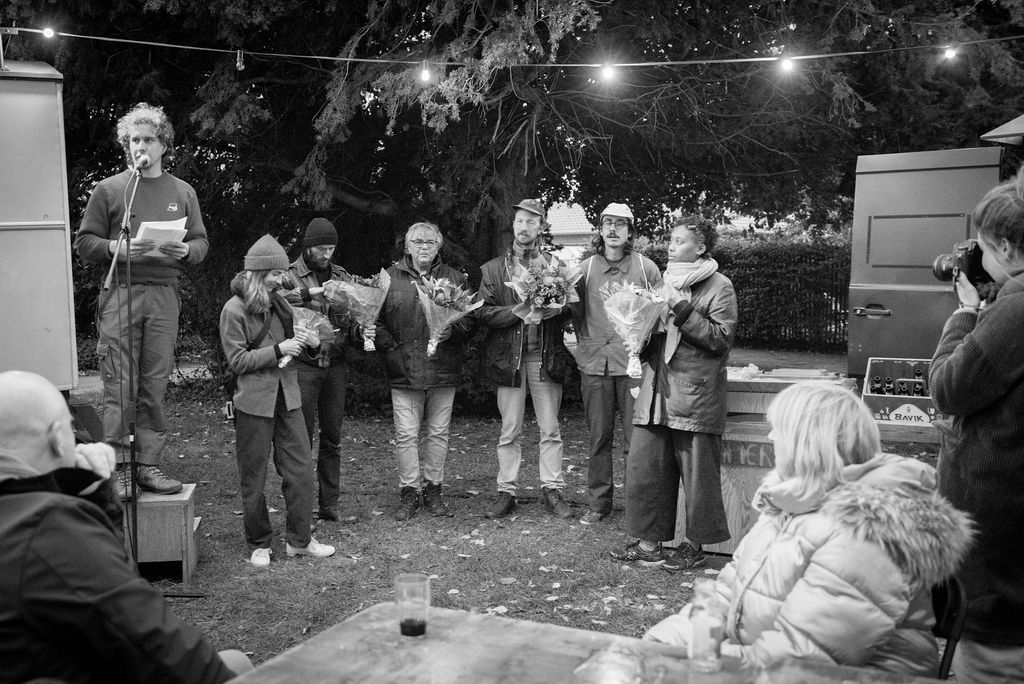
As a tribute, a brief discussion of the artists' work is only fitting!
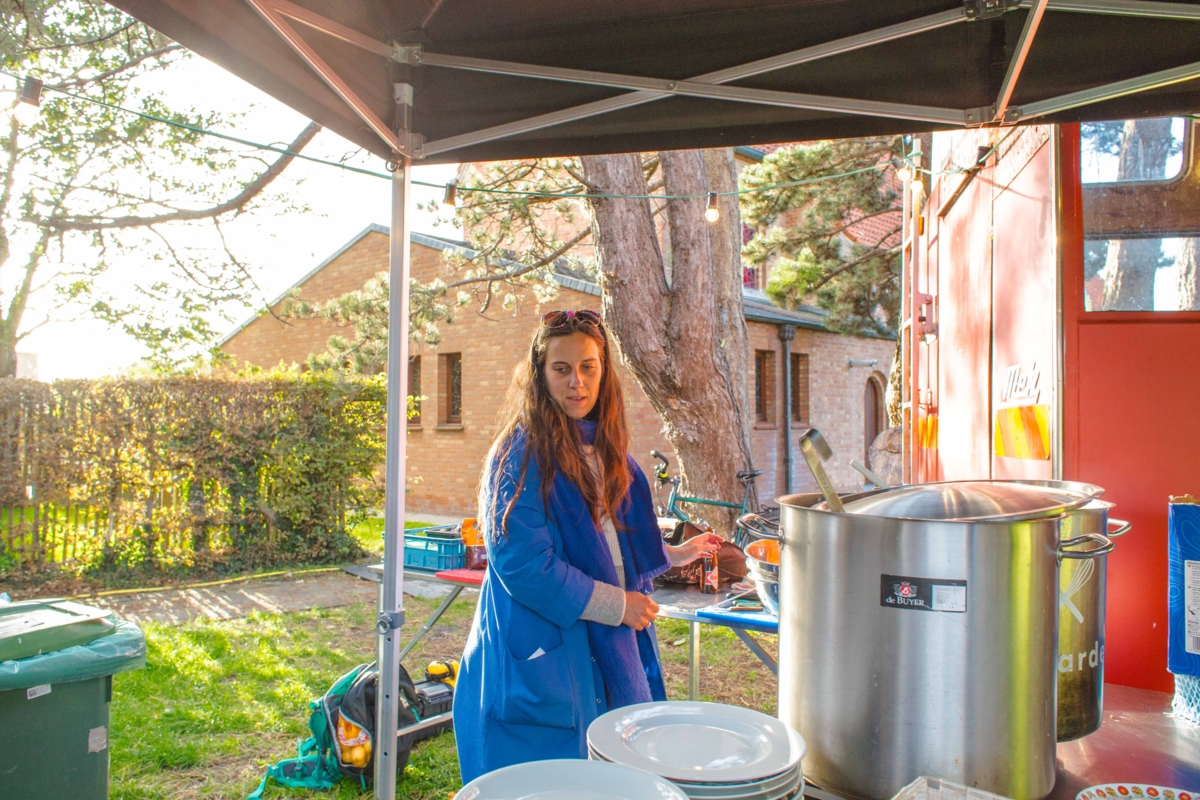
Jana Vasiljević cooked a delicious Serbian stew, wrote an accompanying cookbook and created a friendship book for the village under the apt title Zwankendamschap. But Jana's ultimate work was undoubtedly her mural, inspired by the view of Zwankendamme, on Lisseweegse Steenweg. It is still on display, so be sure to take a look! Pots of paint and scaffolding were brought in and Jana, assisted by her friends, spent four days painting a gigantic and breathtaking landscape!
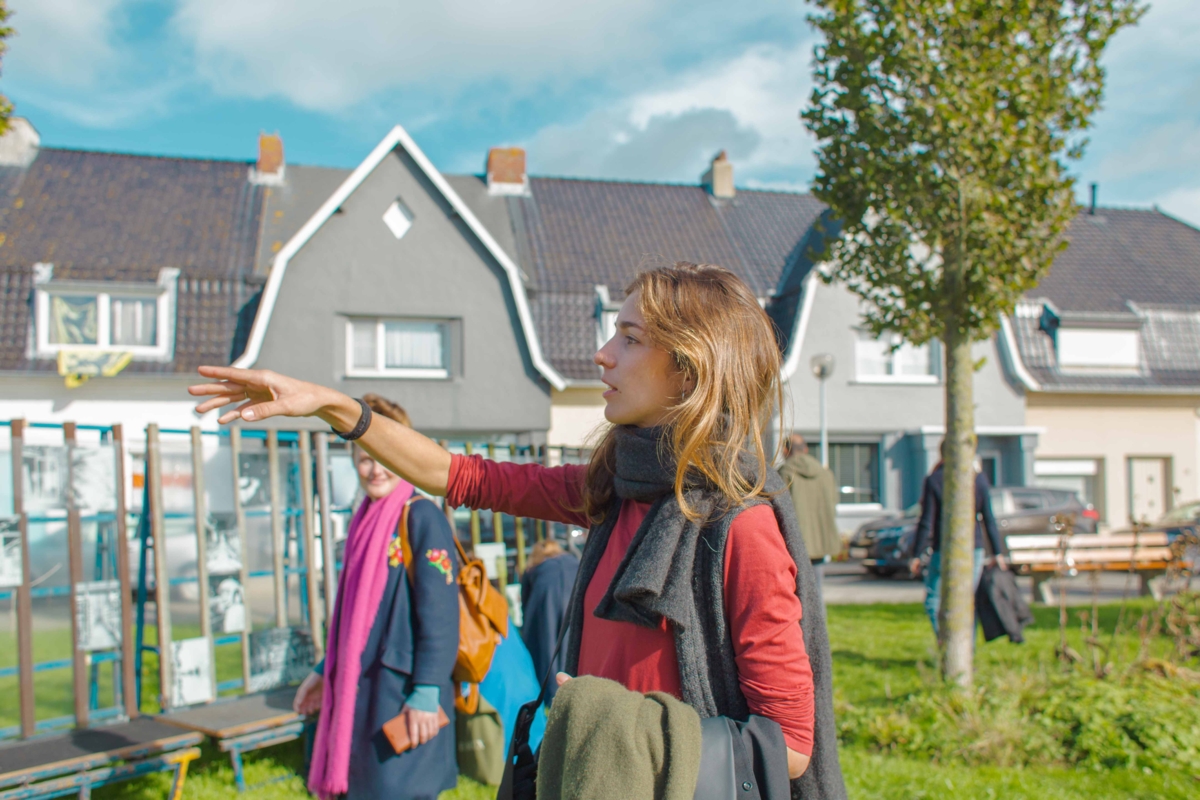
When you say Zwankendamme, you naturally also say glass factory. And Laura Van Severen quickly realised that. She became intrigued by the factory and its history, by the workers and the community life of yesteryear. Almost all the inhabitants of the village have a story about that history up their sleeve, and so after less than a week, Laura knew half the village by their first names. As a photographer, she took portraits of the villagers, captured the unique architecture and took a contemporary look at the factory. She collected the many conversations in short passages of text that bring together memories and anecdotes about the factory. She presented the texts and images together on old glass racks, with glass plates serving as the background for the collages.
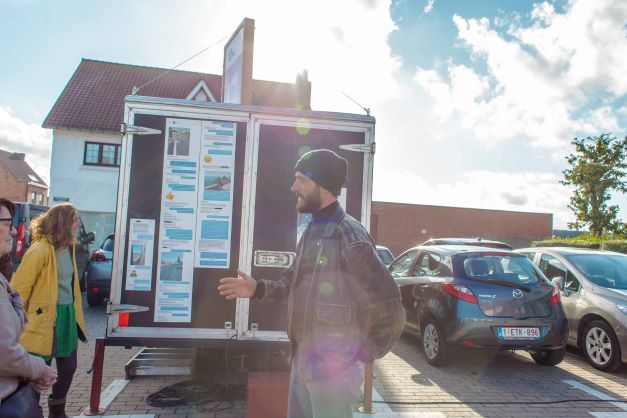
Maarten De Vrieze parked his studio, which also served as his sleeping quarters, on the 'market' in Zwankendamme. Connected to Jimmy's house by a power cable, he was able to work to his heart's content throughout the entire period. He looked back on a previous project in which he explored the role/place of truckers in our society and worked meticulously on a film that tied in with this. During the final weekend, he explained his entire journey using a tent canvas that he had written on himself and, of course, showed his long-awaited film, an intimate portrait of the beekeeper Ljupjo.
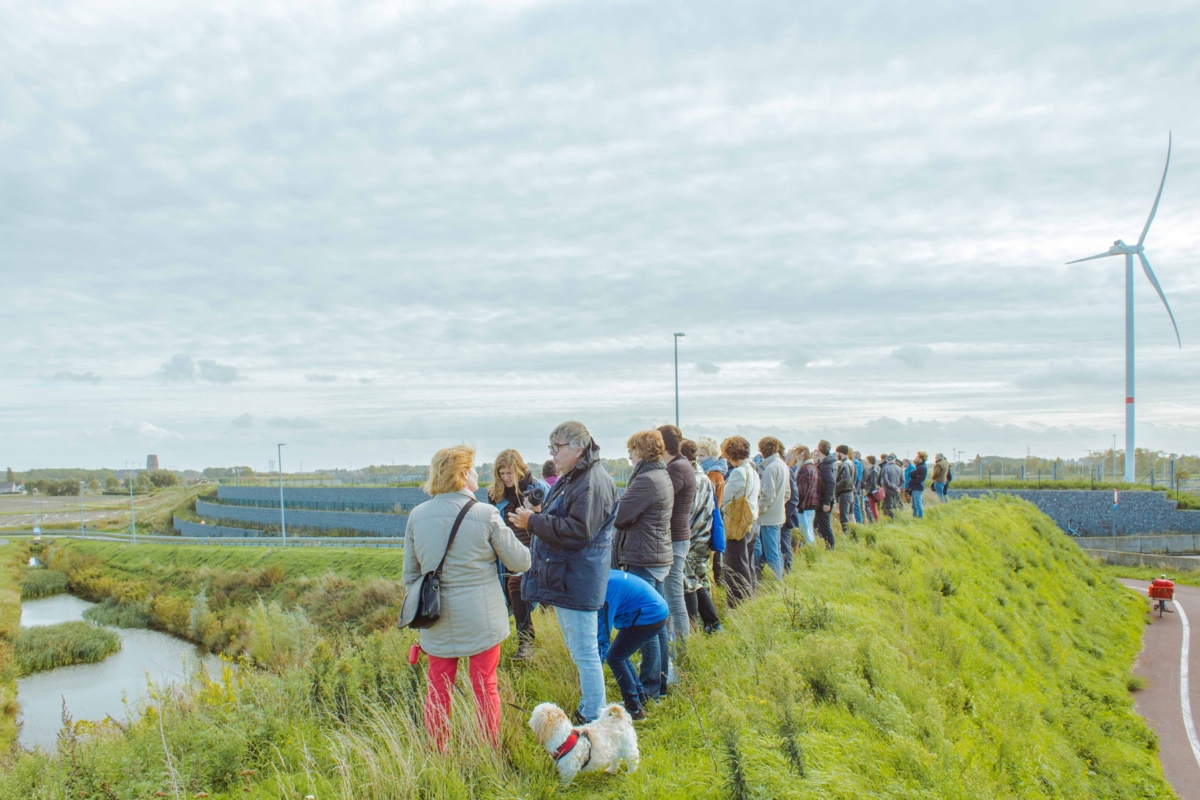
The Temporary Information Centre (TIC), an initiative of the two ever-affable artists Kasper Demeulemeester and Jakob Van den Broucke, set up a new department for the occasion and worked under the name 'Temporary Information Centre, De Berm Department'. After all, the verge is a fascinating landscape feature around the village of Zwankendamme, intended to somewhat dampen the noise from the harbour and the marshalling yard. TIC produced a beautiful publication in which they compiled all the information they had found about the verge on a series of A4 sheets. From articles and conversations with local residents to their own reflections, all information concerning the verge was worth its weight in gold. They also made a film (from the berm) and, as a finale to their three weeks of work, they invited the entire village of Zwankendamme to the top of the artificial hill. There they stood, a hundred or so local residents and visitors, listening to the (many) sounds for ten minutes and looking at the village from a new perspective. Finally, the church bells rang and everyone descended.
Thia(ba) Diop Egutchi focused on those who are overlooked by society, those who do not stand out and are not recognised. Thia(ba) went out (in all weathers) with a tape recorder and recorded the sounds of the quietest and smallest inhabitants of Zwankendamme: the insects. Guided by the silent but omnipresent sounds of these insects, Thia(ba) composed a beautiful poem. The poem, read aloud by their wonderful voice, and the sounds of the insects came together in an enchanting and critical audio work that she presented in the church of Zwankendamme. All in all, it was an impressive and unforgettable experience.
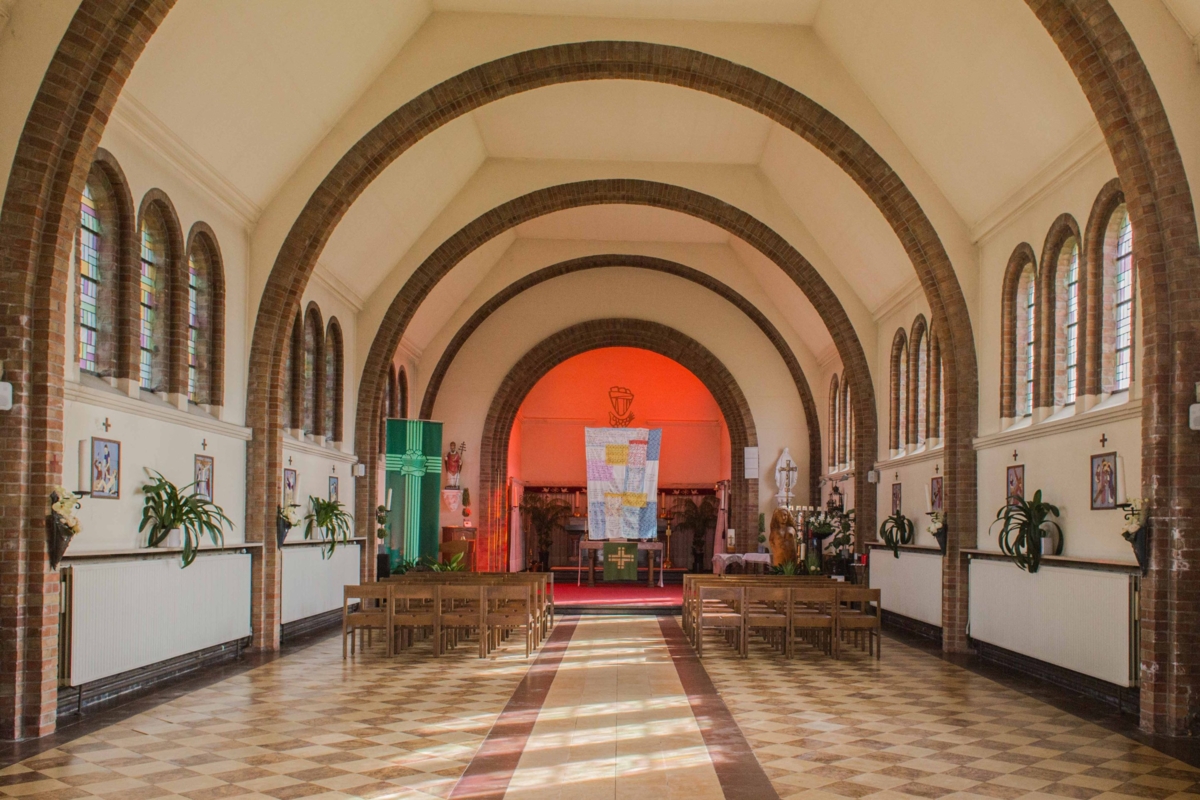
During the wanderings of our five likeable artists, there was of course plenty of other fun entertainment on the programme. We had a number of neighbourhood restaurants and a few really cool workshops. In collaboration with MOOOV, a documentary film about Doel was shown (due to the aforementioned weather, in the dry comfort of the church). Together with Cactus Music Centre, we enjoyed a tasteful performance by Kosmo Sound (again in the church due to the weather gods). And of course, there was the final performance in the series by Billie Kawende. This time, she brought along a gospel choir called The Unusuals (and yes, fortunately, due to the bad weather, this could also take place in the church). It was a wonderful evening in which Billie and her choir felt right at home in a unique setting.